What AI Actually Changed When We Built It Into a Learning Platform
A look at what happens when you embed AI into a learning platform, using a three-layer lens to separate real retention gains from vanity metrics.
You launch an AI feature, polish it for three months, and watch the adoption metrics. At first, the usage spikes. Users click the shiny new buttons, generate some text, and then… nothing. The engagement curve flattens out. I’ve been there. When we first scaled AI across our platform, I watched a quarter’s worth of engineering effort turn into a dashboard of vanity metrics. Users were trying the tools, but their actual behavior wasn’t changing.
We often frame the technology wrong. When product teams look at AI integration, they often see it as a single feature drop, a conversational agent here, an automated feedback loop there. But embedding AI into a learning environment changes the underlying architecture of how people interact with knowledge. To separate real retention gains from novelty spikes, you have to look through a three-layer lens: efficiency, pedagogy, and ideology.
Key takeaways
- Efficiency is table stakes: Reclaiming operational hours is the easiest win, but it doesn’t automatically improve the user’s outcome.
- Pedagogy requires friction: Removing all difficulty through AI assistance hurts long-term retention. You have to design the struggle back into the workflow.
- Ideology shapes trust: The assumptions baked into your models, about what “good” looks like, will silently retrain your users if you aren’t careful.
- Data over novelty: Measure success by task completion and cohort retention, not just feature activation.
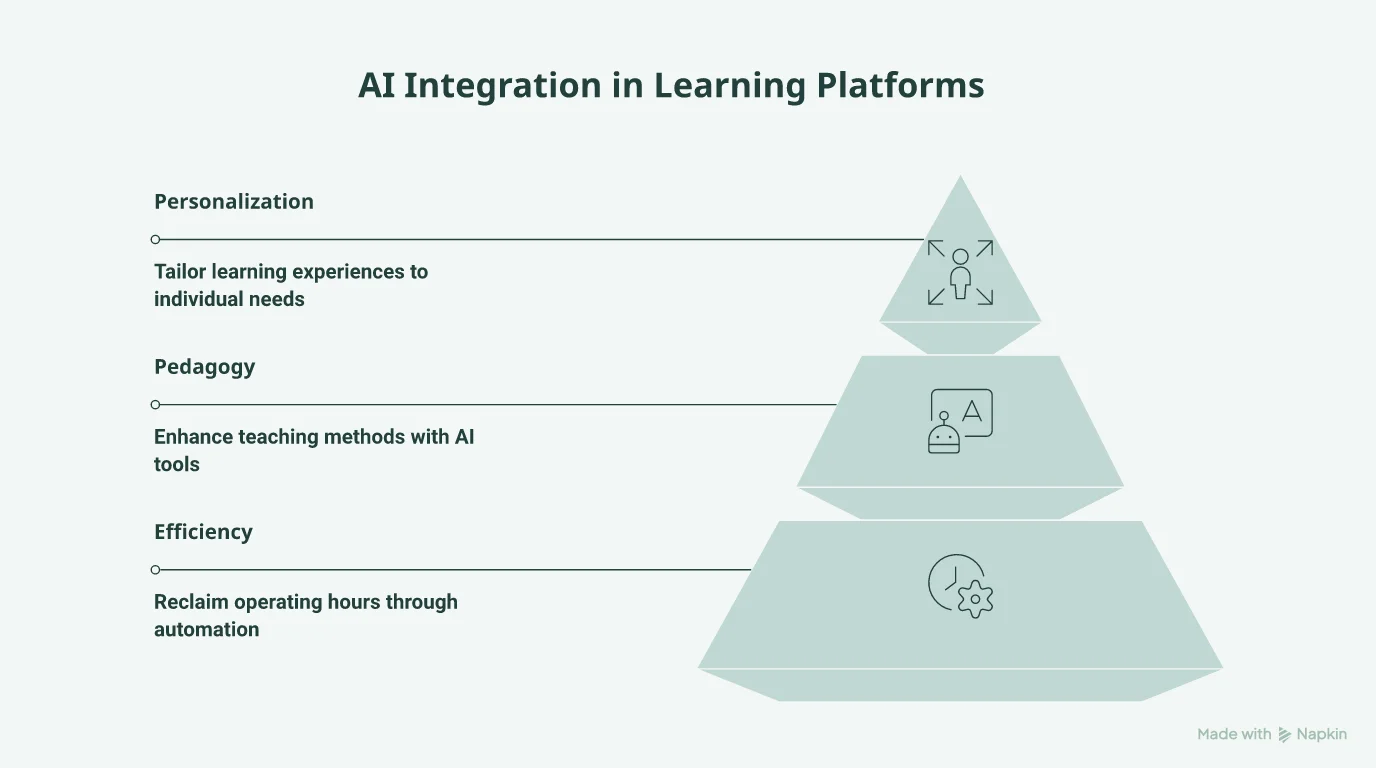
The Efficiency Layer: Reclaiming the Operation
The most immediate impact of AI is operational. When we rolled out our first major wave of automation, the goal wasn’t just to add features, it was to reclaim lost time. Over a single year, we pushed 33 production AI and automation initiatives across the platform. The measured outcome from my quarterly performance logs was stark: we reclaimed ~29,000 work-hours annually.
But efficiency can be a trap. It is incredibly easy to confuse operational speed with user success. A 2026 review on AI-mediated learning environments by Javadinejad and Davari notes that while AI systems excel at optimizing activities through automation, that optimization must be carefully directed. If you use AI simply to deliver the exact same experience faster, you haven’t improved the product. You’ve just compressed it.
The real value of efficiency is that it clears the deck. By automating the routine feedback cycles and administrative overhead, we freed up our domain specialists to focus on high-leverage interventions. The metric that mattered wasn’t the hours saved; it was what we did with those hours to drive up our 14-day conversion from 0.23% to 1.86%. Scaling AI From Experiment to Infrastructure Inside a Product Org details exactly how we managed that shift from novelty to core infrastructure.
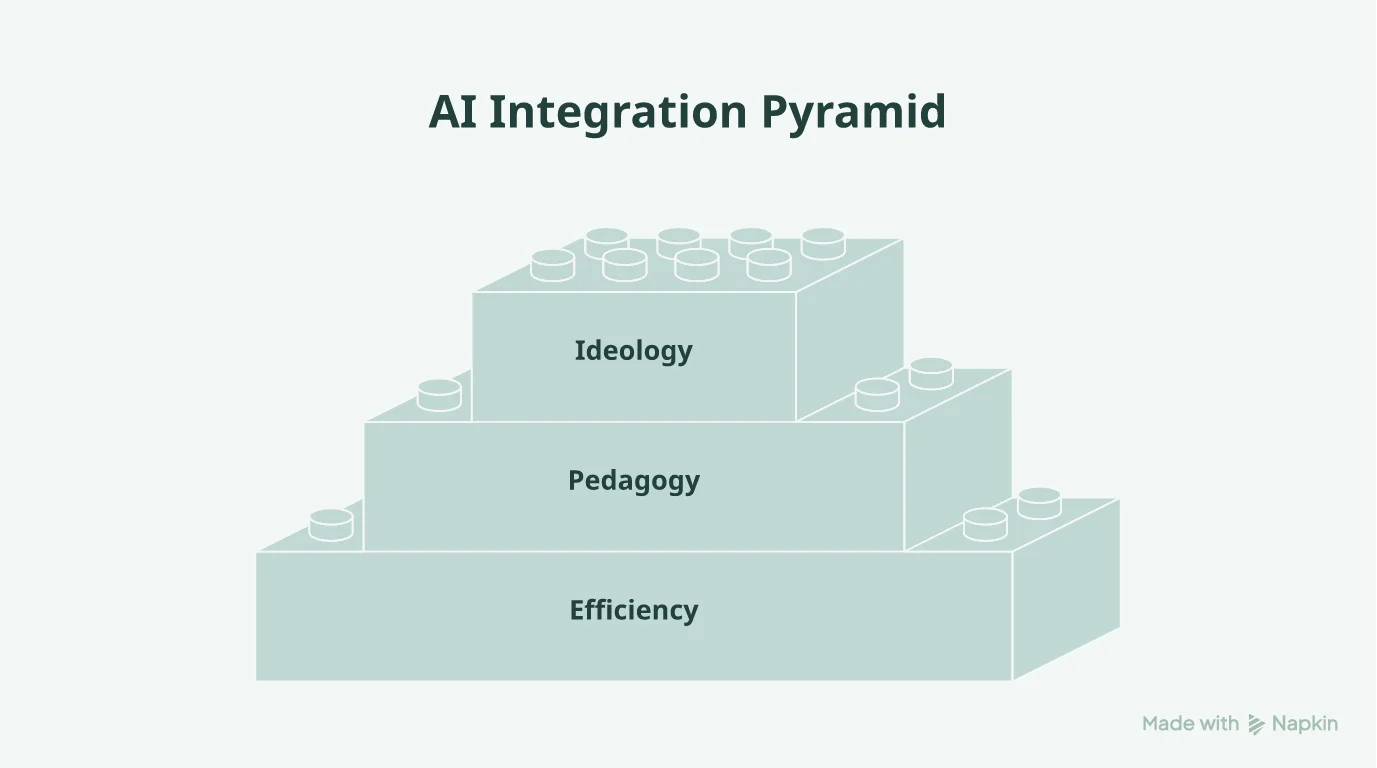
The Pedagogical Layer: Designing the Right Kind of Friction
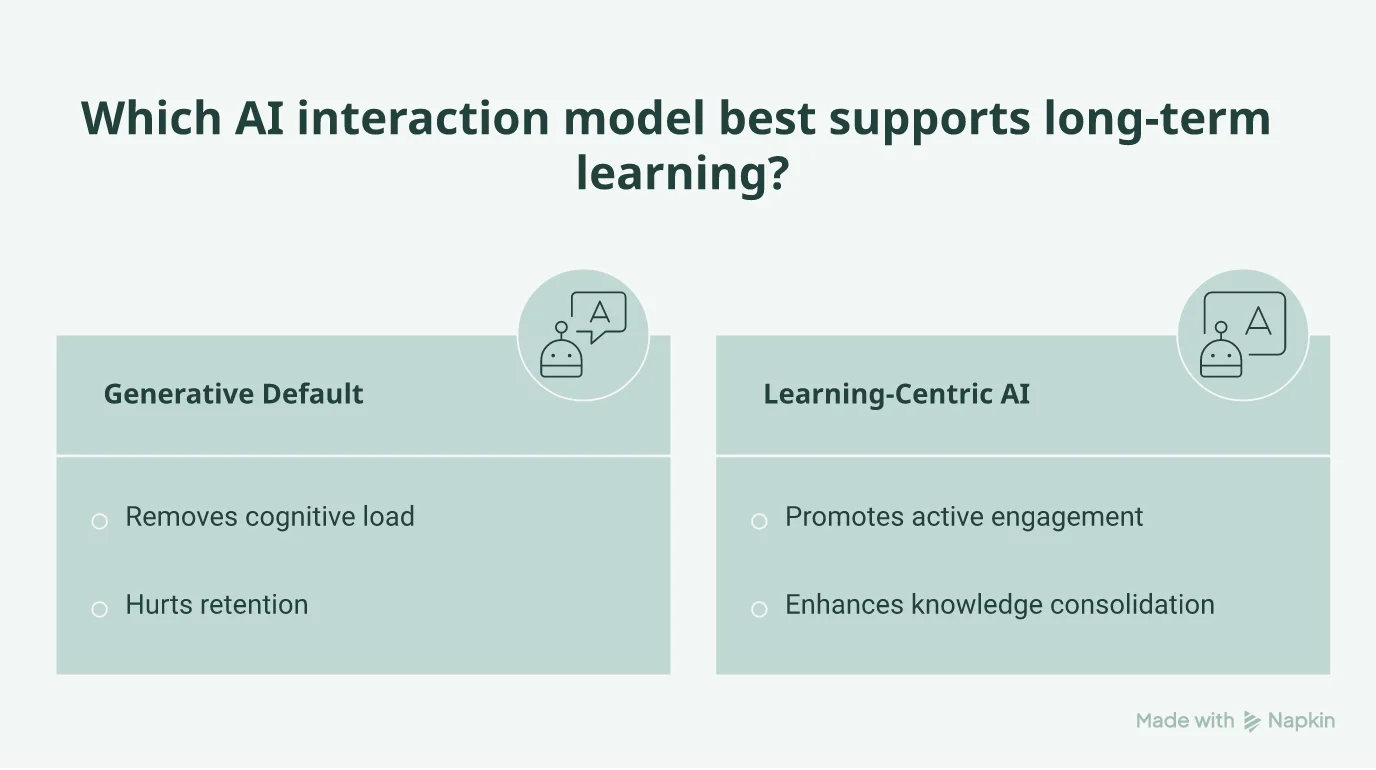
Here is where most AI integrations fail. The default behavior of a generative model is to give the user the answer. In a B2B SaaS tool, that’s perfect. In a learning platform, it’s disastrous.
During the rollout of our six-course AI-engineering programme, we saw this tension firsthand. If the AI agent immediately solves the user’s code error, the user finishes the task faster. But when we looked at the cohort analysis, the users who received immediate, complete solutions struggled significantly when faced with new, unassisted tasks later in the sequence.
Research backs this up. Javadinejad and Davari highlight that AI reshapes learning processes and feedback cycles, fundamentally altering learner strategies. When an AI removes all cognitive load, it also removes the mechanism for retention.
We had to rewire the agent’s behavior. Instead of providing the answer, we constrained the model to provide Socratic hints. We deliberately introduced friction back into the user journey. We wanted the user to hit a wall, consult the AI for a nudge, and then overcome the wall themselves. This is the difference between building a tool that does the work and building a tool that builds the user. If you want to understand how this connects to broader governance, Decision Infrastructure That Makes the Right AI Call the Default covers the systems needed to enforce these guardrails.
The Ideological Layer: The Hidden Cost of “Helpful”
Every AI model carries embedded assumptions. When you integrate a model into your core product engine, you are integrating those assumptions into your user experience. This is the ideological layer, the normative assumptions about language, authority, and correctness that your system enforces.
In my data reviews, we noticed that automated feedback systems often pushed users toward a very specific, homogenous style of communication. The AI was technically correct, but it was flattening the users’ distinct voices. Javadinejad and Davari refer to this as the ideological dimension, encompassing issues of epistemic authority, linguistic norms, and algorithmic bias.
As a product leader, you have to decide what “good” looks like for your platform. If you blindly accept the model’s default definition of good, you risk alienating the very people you are trying to help. We had to implement strict prompt engineering and custom fine-tuning to ensure our AI agents respected the varied backgrounds of our active users, rather than forcing them into a standardized mold. This is a core part of Designing Trust Into AI Products, you cannot outsource your product’s values to a third-party API.
Measuring What Actually Matters
When you build AI into a platform, the vanity metrics will lie to you. Activation rates will spike because the feature is new. Session times might drop because the AI is fast, or they might spike because the user is playing with the chatbot. None of these tell you if the product is actually working.
You have to anchor your measurement to the core operational workflow. Does the AI intervention improve the rate at which users complete their critical milestones? Does it lift long-term cohort retention?
In our case, the 33 initiatives weren’t successful because they used AI. They were successful because we measured their impact on the specific friction points that were causing churn. We treated AI as a structural component of the platform, subject to the same rigorous performance standards as any other feature.
If you are leading a product team through this transition, stop looking at the AI dashboard and start looking at the user outcome. The technology is just the infrastructure. The real work is deciding how to use it to drive the behavior that matters.
References
- Javadinejad, A., & Davari, M. (2026). The Architecture of AI-Mediated Learning: A Three-Layer Framework. Applied Sciences, 16, 4991. https://doi.org/10.3390/app16104991
Frequently asked questions
How do you measure the success of an AI feature in a learning platform?
Measure success by tracking task completion and long-term cohort retention. Avoid relying on feature activation or generation counts, as these are often novelty-driven vanity metrics.
Why is friction important in AI-mediated learning?
Friction is essential for retention. If an AI immediately provides the complete answer, the user avoids the cognitive struggle necessary to actually learn and remember the material.
What is the ideological layer of AI integration?
The ideological layer refers to the hidden assumptions baked into an AI model, such as linguistic norms and definitions of correctness. Product teams must actively manage these to ensure the AI aligns with their specific platform values rather than enforcing a homogenous default.