Transforming Healthcare Services with AI Ecosystems
When you treat AI in healthcare as a standalone technology, it fails. We must design AI as an integrated capability across the service ecosystem.
When you launch a healthcare product, you quickly learn that adopting new technology isn’t the real bottleneck, integrating it into the existing human service ecosystem is. During the rollout of our clinical decision support system, we saw high adoption in theory, but when I reviewed our Q1 2025 OKR performance logs, active daily engagement was flat. The model was highly accurate, but it didn’t fit into the clinicians’ existing workflows. It was treated as a standalone piece of software rather than an enabler of a broader service experience. We forced highly trained professionals to step out of their natural rhythm to query a dashboard. The friction cost more time than the prediction saved.
We had to fundamentally rethink our approach. AI’s structural potential in healthcare lies not in technology alone, but in how it is designed, governed, and embedded within service experiences. Recent research underscores that AI-enabled healthcare must be conceptualized across three interrelated dimensions: service personalization, service intelligence, and service stewardship (Scheepers et al., 2025). When you stop thinking about AI as a tool and start designing it as an ecosystem capability, everything changes. You move from point solutions that gather dust to integrated workflows that actively drive clinical outcomes.
Key takeaways
- AI must be designed as an integrated service experience, not a standalone technological tool.
- Personalization requires continuous, bi-directional data flow from wearables, clinical records, and third-party systems.
- Healthcare organizations should rely on modular, turnkey AI solutions rather than building custom models from scratch.
- Governance and compliance are core product capabilities that must be baked in, ensuring ethical stewardship of sensitive health data.
Moving from Static Records to Dynamic Personalization
Historically, medical personalization was constrained by the sheer difficulty of interpreting disconnected patient histories. We tried to give clinicians “more data,” but as our Q2 2024 launch retro revealed, displaying more raw data simply increased cognitive load and drove up consultation times by 14%. We were overwhelming providers with noise instead of surfacing the signal.
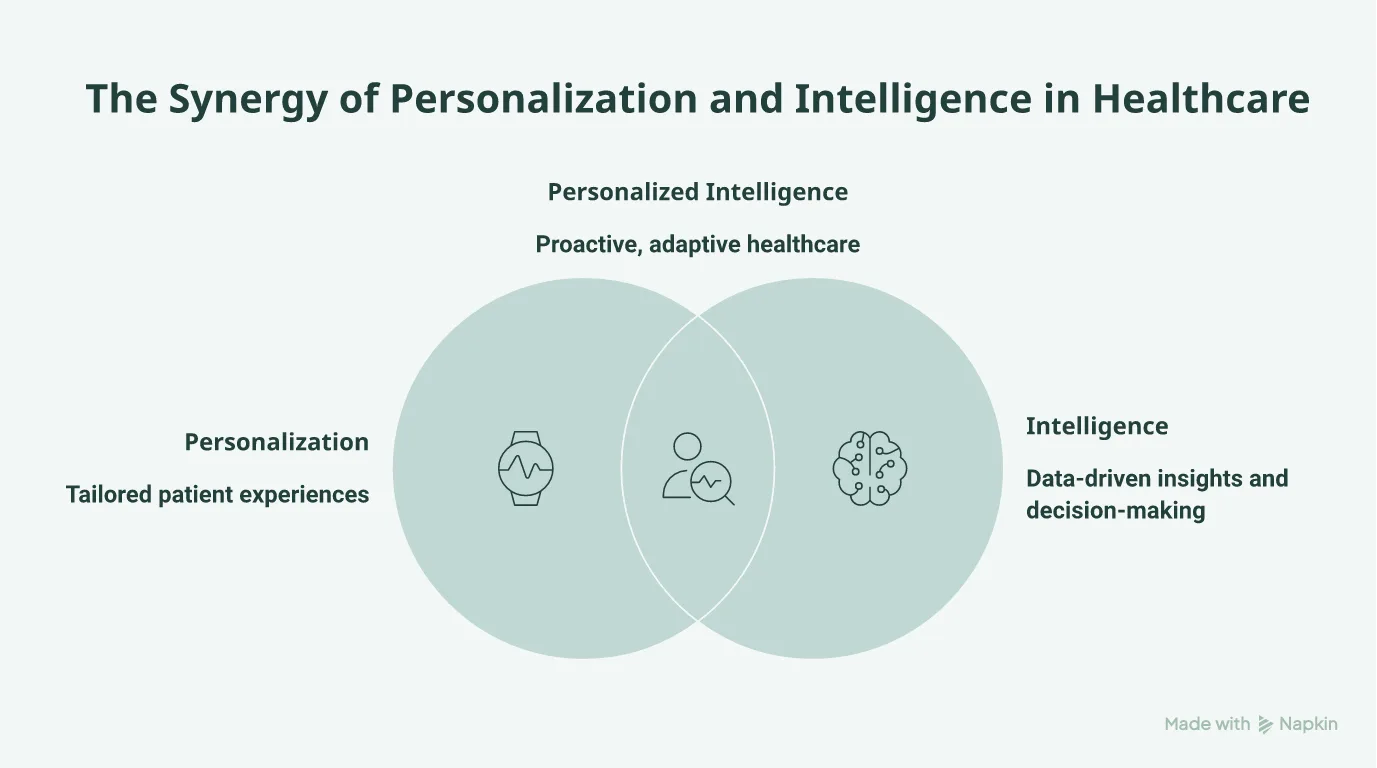
True service personalization requires contextualization. An AI-enabled service experience must factor in a patient’s prior medical history alongside real-time contextual attributes. Personal health AI, such as wearable devices and continuous glucose monitors, provides this vital context by tracking real-time health metrics (Scheepers et al., 2025). We are seeing a rapid expansion from smartwatches that detect irregular heart rhythms to in-home monitoring systems like smart beds that assess respiration and posture.
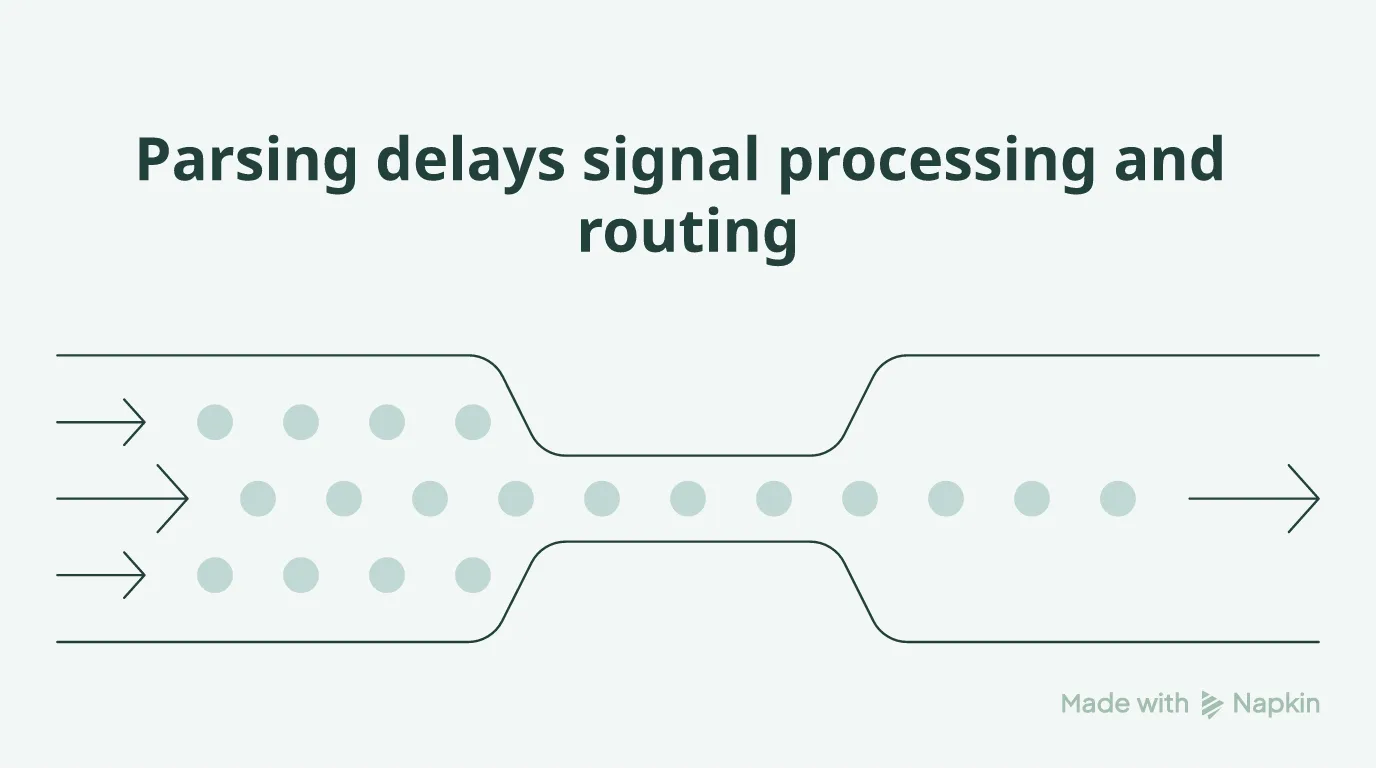
When you integrate big health data with these patient-generated signals, the service becomes adaptive. A patient is no longer a snapshot taken during a clinic visit; they are a continuous stream of actionable insights. For a product leader, the challenge is not generating these insights but creating the data integration capabilities to consolidate fragmented information into a unified, actionable view without overwhelming the provider. We have to design systems that parse HL7 messages and FHIR standards automatically, so the physician only sees the anomaly, not the raw telemetry. It shifts the burden of sense-making from the human to the machine.
Building Intelligence That Learns and Evolves
A service that remains static quickly becomes obsolete. Intelligent automation and machine learning allow services to adapt over time based on new data and behavioral interactions. If your product requires manual updates every time a clinical guideline changes, you have built a liability, not an asset.
During our deployment of a patient triage platform, we initially hard-coded the routing rules. Within three months, our platform growth data showed a 22% drop in activation because the rules couldn’t adapt to seasonal shifts in patient symptoms. We transitioned to a learning system that adjusted its parameters based on real-world evidence and clinician feedback loops. This is what Scheepers et al. (2025) describe as service evolution: systems that continuously update themselves based on new data, reducing administrative burden and streamlining clinical workflows.
Instead of building these evolutionary capabilities from scratch, modern healthcare organizations are shifting toward modular, turnkey solutions. Regulatory-approved AI tools, such as FDA-cleared radiology modules or ambient clinical documentation systems, allow you to plug intelligence directly into your existing infrastructure. Your core product competency shifts from algorithm development to vendor selection and clinical validation. Designing Trust Into AI Products requires exactly this kind of rigorous validation, ensuring that third-party intelligence aligns seamlessly with your operational standards. You must be able to evaluate a vendor’s bias mitigation strategy as thoroughly as you would evaluate their uptime SLA.
Engineering Outcomes and Responsible Stewardship
In healthcare, efficiency means nothing if it compromises safety. The third dimension of AI service experience is outcomes and stewardship, which emphasizes accountability, ethics, and governance (Scheepers et al., 2025). The moment an algorithm dictates a care pathway, the product team assumes clinical liability.
As we scaled our AI solutions from 33 to 43 deployed models across different clinical departments, governance became our heaviest operational tax. In our project post-mortems throughout 2025, we found that compliance couldn’t be an afterthought handled by a separate legal team. It had to be engineered directly into the product. This aligns with the principle that AI Governance Is a Product Discipline, Not a Compliance Checkbox. If a model drifts, the system must degrade gracefully and alert the human overseer before an incorrect dosage is recommended.
Stewardship in an AI-enabled healthcare ecosystem involves managing interoperability standards, monitoring for algorithmic drift, and ensuring data privacy across an increasingly porous boundary between clinical care and in-home monitoring. When patients share data from their smart beds or wearable ECG monitors, they are placing immense trust in your infrastructure. Insurers and payors are also watching closely, using this data to make coverage determinations. Robust governance frameworks are the only way to safeguard that trust, ensure equitable outcomes, and prevent algorithmic bias from denying care to vulnerable populations.
Ecosystem Orchestration Over Isolated Development
The most dangerous trap for a healthcare product team is the “not invented here” syndrome. Trying to build every AI component in-house will drain your budget and delay your roadmap. Healthcare AI is evolving too fast for any single hospital system or startup to build the entire stack.
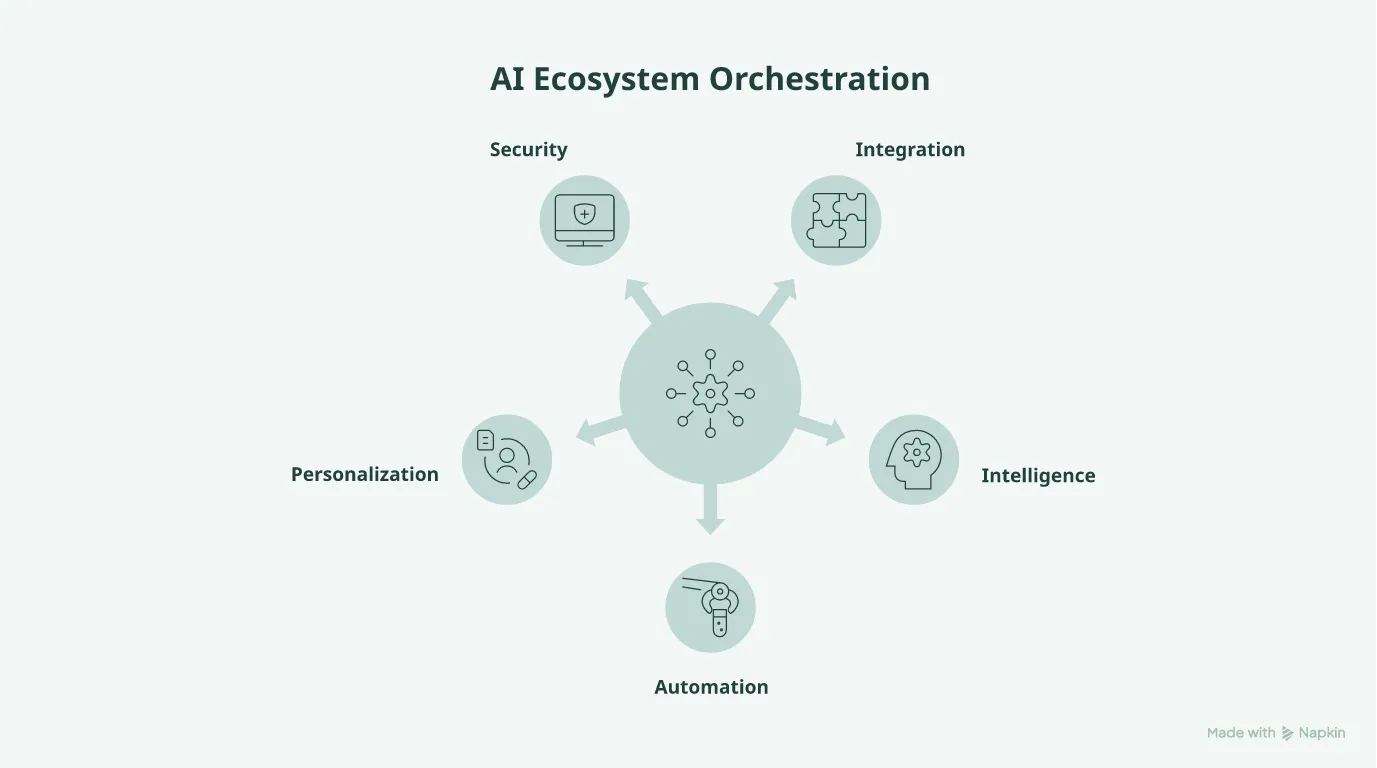
The modern healthcare ecosystem is a complex network of providers, insurers, technology vendors, and regulators. The capability you must develop is orchestration. You need the ability to adopt packaged AI solutions, integrate them via secure APIs into your electronic health records, and maintain strict clinical oversight. This requires a shift from isolated development to ecosystem coordination. You don’t need to build the computer vision model that detects tumors in mammograms. You need to build the workflow that routes the flagged image to the right oncologist, attaches the patient’s genetic profile, and drafts the preliminary report.
You configure, you validate, and you orchestrate, ensuring that every AI module serves the ultimate goal: a safer, more personalized, and highly intelligent service experience for the patient. By embracing this orchestration mindset, we stop treating AI as a novelty and start treating it as the foundational infrastructure of modern care.
References
- Scheepers, R., Ewing, M. T., Reddy, S., & Cybulski, J. L. (2025). Transforming healthcare service experiences through AI: Capabilities, ecosystems, and implications. Business Horizons, https://doi.org/10.1016/j.bushor.2026.05.008.
Frequently asked questions
How does AI improve the personalization of healthcare services?
AI improves personalization by continuously analyzing integrated data streams from electronic health records and personal wearable devices. This allows providers to tailor treatments to a patient's unique, real-time context rather than relying on static clinical snapshots.
What is a turnkey AI solution in healthcare?
A turnkey AI solution is a pre-packaged, ready-to-use system developed by a third-party vendor that integrates directly into existing clinical workflows. These solutions, such as FDA-approved radiology modules, allow providers to adopt AI rapidly without building custom models from scratch.
Why is stewardship critical for AI-enabled healthcare?
Stewardship is critical because it ensures accountability, patient safety, and ethical data governance. As AI systems rely on sensitive patient data from both clinical and in-home environments, robust compliance frameworks are necessary to maintain trust and mitigate algorithmic risks.