When Your Money App Starts Acting on Its Own
The biggest forward bet is AI agents inside the wallet that pay, optimize, and advise autonomously. Here is what the reliability and governance evidence says.
The modern fintech narrative fixates on a frictionless user experience. Product teams relentlessly optimize single-tap checkouts, low-friction onboarding, and ecosystem flywheels. However, the most significant forward bet is autonomous action. We are entering the era of the agentic wallet, money apps that go beyond storing value and routing payments by actively managing them on your behalf.
Consider a user who authorizes their wallet to manage subscription renewals. An agentic wallet detects a recurring price hike, searches for a cheaper alternative, and automatically transitions the payment method without explicit user intervention. This level of autonomy shifts the fundamental value proposition of a digital wallet from a passive vessel to an active fiduciary. Navigating the gap between a compelling prototype and a production-grade financial agent demands rigorous attention to reliability and governance. Product managers can no longer rely solely on user interface tweaks; they must engineer decision infrastructure that can withstand the intense scrutiny of financial regulators and the brutal reality of system failure.
Key takeaways
- Agentic wallets require “meta-reasoning” to recover from failures mid-execution.
- Autonomous financial agents shift the product focus from feature delivery to reliability engineering.
- Governance and compliance must be deeply integrated into the agent’s decision infrastructure.
- The cost of autonomy is latency, offset by efficiency in token consumption.
The reliability gap in financial agents
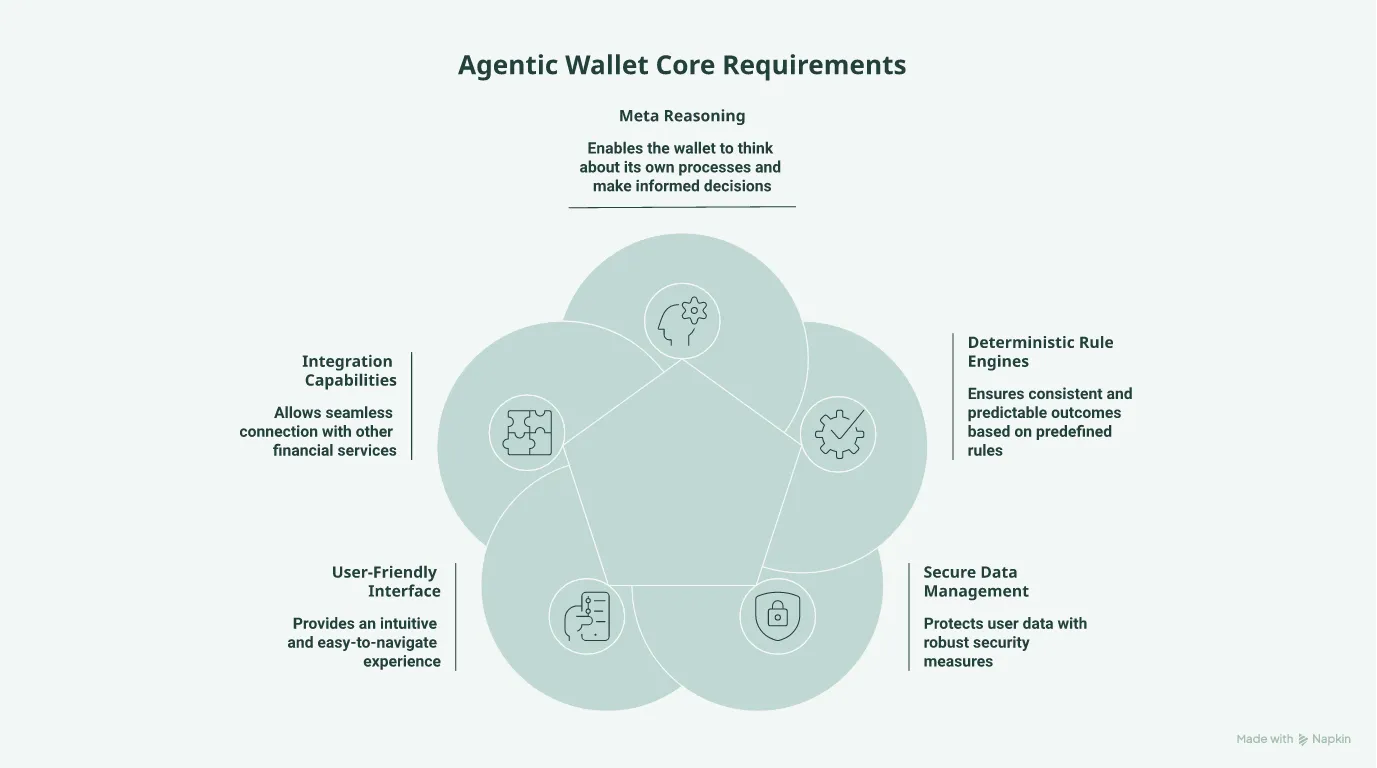
The most pressing challenge in shipping an agentic wallet is the reliability of the underlying reasoning engine. Early generations of large language model (LLM) agents operated on rigid “Thought-Action-Observation” loops, commonly known as ReAct architectures. If a tool call failed due to an API timeout, a malformed request, or an unexpected backend response, these agents would often enter a catastrophic failure mode. They would repeatedly invoke the same failing action until their token limit was exhausted. In a financial context, an agent stuck in a loop while attempting a fund transfer or an investment rebalancing constitutes a critical trust violation.
Recent research on meta-reasoning demonstrates a clear path forward. A 2026 study evaluating autonomous agents found that equipping them with a closed-loop metacognitive control system, enabling continuous monitoring and adaptive strategy switching, yielded a 31.2% improvement in task completion rates. More importantly for wallet infrastructure, these meta-reasoning frameworks delivered a 150.7% improvement in error recovery compared to baseline approaches. The agent recognizes when it is failing, pauses, reflects on the error, and attempts an alternative strategy. This architectural shift from static execution to dynamic recovery is the baseline requirement for any autonomous financial feature.
Meta-reasoning as the new product requirement
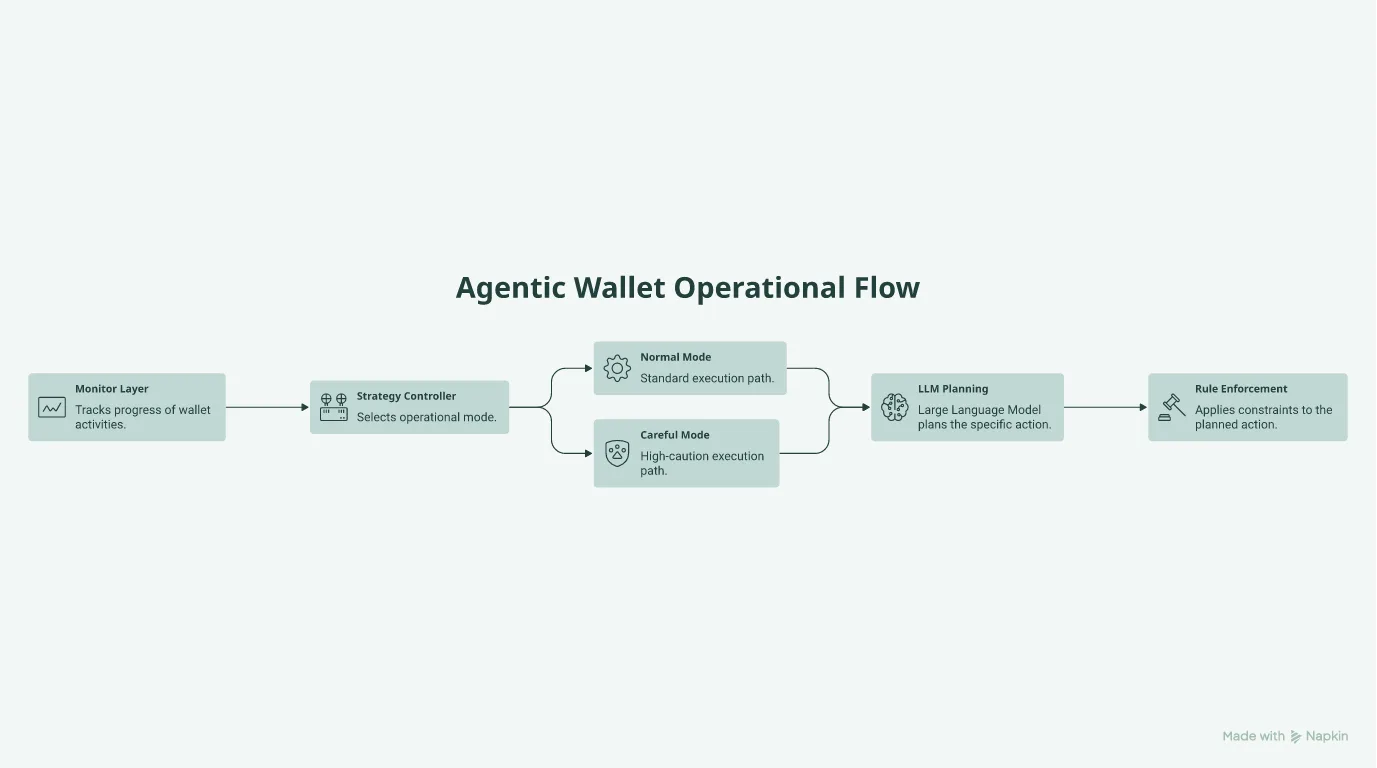
For product leaders building the next generation of digital wallets, meta-reasoning must be a core architectural requirement. The meta-reasoning framework is built on specific components: a Monitor Layer that tracks progress rate, coherence score, and resource consumption, and a Control Layer that utilizes a Strategy Controller. The Strategy Controller maintains a finite state machine that can shift the agent’s behavior from a “Normal” state to “Careful” or “Exploratory” depending on real-time performance metrics.
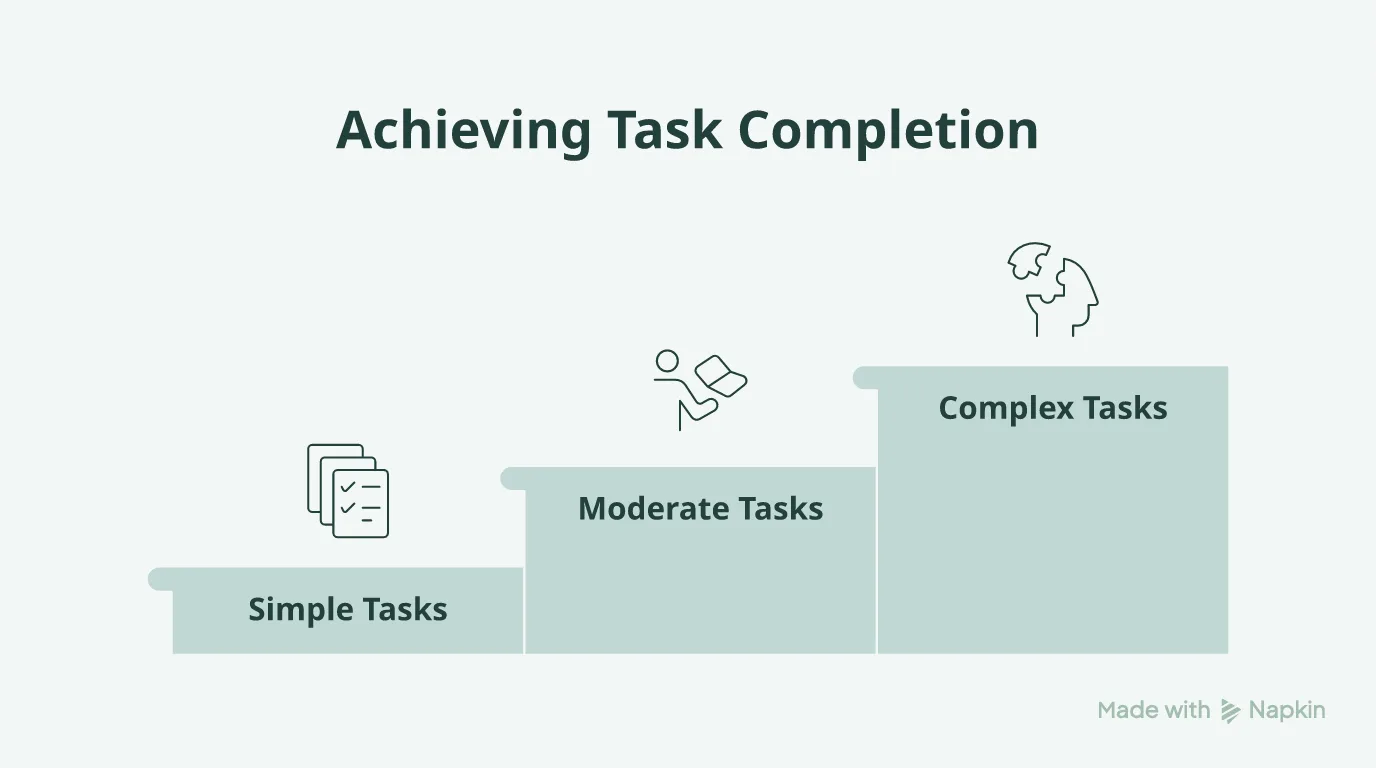
The same 2026 study revealed that the benefits of meta-reasoning scale with complexity. Simple, single-step tasks saw modest gains of an 18.7% improvement. In contrast, complex multi-step workflows, such as orchestrating a transfer across multiple accounts while verifying regulatory limits, experienced a massive 42.1% improvement in completion rates. Decision quality also increased by 24.7% across these complex tasks.
This complexity-dependent return on investment dictates the roadmap for financial products. A standard payment initiation might function adequately with standard prompting, while a portfolio optimization task absolutely requires deep metacognitive overhead. Implementing this architecture introduces explicit trade-offs. The study noted a 17.9% increase in end-to-end latency due to the additional monitoring and reflection cycles. However, this latency was entirely offset by an 18.9% reduction in API token consumption. The agent wasted fewer resources on unproductive exploration, making the unit economics of agentic features viable at scale.
Governance at the speed of autonomy
An agentic wallet operates within a deeply constrained regulatory environment. In Southeast Asian markets like Indonesia, Bank Indonesia (BI) and the Financial Services Authority (OJK) mandate strict compliance frameworks. The enactment of Law No. 4 of 2023 formally bifurcated the ecosystem, creating distinct regulatory boundaries for payment systems versus consumer lending. Furthermore, under BI’s PBI 10/2025, legacy licensing is replaced by the dynamic, risk-based “Activity Bundling” framework centered on the TIKMI assessment (evaluating Transactions, Interconnection, Competence, Risk Management, and IT Infrastructure).
When a human user initiates a transaction, the consent and intent are explicitly captured. When an autonomous agent initiates a transaction on the user’s behalf, the lines of liability blur significantly. If an agent executes an unauthorized cross-border transfer or incorrectly triggers a Buy Now Pay Later (BNPL) drawdown, the platform faces immediate regulatory friction.
To safely deploy agentic features, governance must be treated as a product discipline rather than a compliance checkbox. The agent’s decision-making process must be bounded by deterministic safeguards. The architectural solution requires separating the probabilistic reasoning layer from the deterministic execution layer. The LLM can plan, strategize, and recommend, but the actual transaction execution must pass through strict, programmatic rule engines. These rule engines enforce transaction limits, anti-money laundering (AML) checks, and cryptographic signature validation.
Integrating SNAP and combating fraud
Beyond basic governance, autonomous agents must interact flawlessly with national payment infrastructures. For example, compliance with the Standar Nasional Open API Pembayaran (SNAP) is a strict prerequisite for passing the IT infrastructure pillars of the TIKMI assessment. SNAP enforces a unified linguistic, architectural, and cryptographic standard for payment integration, relying on a dual-signature architecture involving both Asymmetric (SHA256withRSA) and Symmetric (HMAC-SHA512) signatures.
If an agentic system constructs a JSON payload with non-structural whitespace or unordered keys, the resulting hash diverges, causing an immediate signature validation failure. Engineering teams must ensure that the output from the agent is perfectly serialized before any cryptographic handshake occurs. Furthermore, agentic wallets face the rising threat of On-Device Fraud (ODF). An autonomous system must be capable of verifying that its execution environment is secure, detecting anomalies in user behavior, and immediately halting operations if the device shows signs of compromise.
Designing for verifiable trust
The success of the agentic wallet hinges entirely on user trust. Users will refuse to delegate financial agency to an AI if they do not understand how it makes decisions or if it fails unpredictably. Designing trust into these systems requires transparent observability. Product teams must surface the agent’s internal thought process in a digestible format and provide granular controls over its autonomy limits. The user needs to see why an agent chose a specific payment routing or why it halted a suspicious transaction.
The transition to agentic wallets represents a fundamental shift in personal finance. The winners in this space will be the platforms that master the invisible infrastructure: the meta-reasoning engines that ensure reliability and the deterministic governance frameworks that ensure strict compliance as part of the broader financial OS transition. In the domain of agentic finance, reliable execution backed by rigorous architectural discipline is the only metric that guarantees long-term survival.
References
- Talukdar W, Biswas A, Shankar G, Shinde V, Parekh G. Meta-reasoning in autonomous agents: performance gains across benchmarks and models. Academia AI and Applications 2026;2. https://doi.org/10.20935/AcadAI8229
Frequently asked questions
What is an agentic wallet?
An agentic wallet is a digital financial application equipped with autonomous AI agents that can actively manage, optimize, and execute transactions on behalf of the user, moving beyond basic value storage and payment routing.
How does meta-reasoning improve AI agents in finance?
Meta-reasoning allows AI agents to monitor their own performance and adapt their strategies when they encounter errors. This architectural enhancement results in a 150.7% improvement in error recovery, preventing catastrophic failure loops during complex financial tasks.
What are the regulatory challenges for agentic wallets?
Agentic wallets must operate within strict regulatory frameworks governed by bodies like Bank Indonesia and the OJK. Ensuring compliance requires deterministic safeguards that separate the AI's probabilistic reasoning from the strict, rule-based execution of financial transactions.