The Next Indonesian Wallet Is a Financial OS
Where GrabPay-class products go next: from stored-value app to an AI-mediated financial operating system spanning credit, banking, insurance, and cross-border.
The era of the standalone e-wallet as a loss-leader is effectively over. For years, the strategic playbook for digital payments in Southeast Asia relied on heavy venture capital subsidies, cashback promotions, and a race to acquire top-of-funnel users at any cost. The industry treated the digital wallet as a stored-value container, measuring success by transaction volume and app downloads. But a downloaded application does not equate to financial participation, and a subsidized transaction rarely yields a sustainable margin.
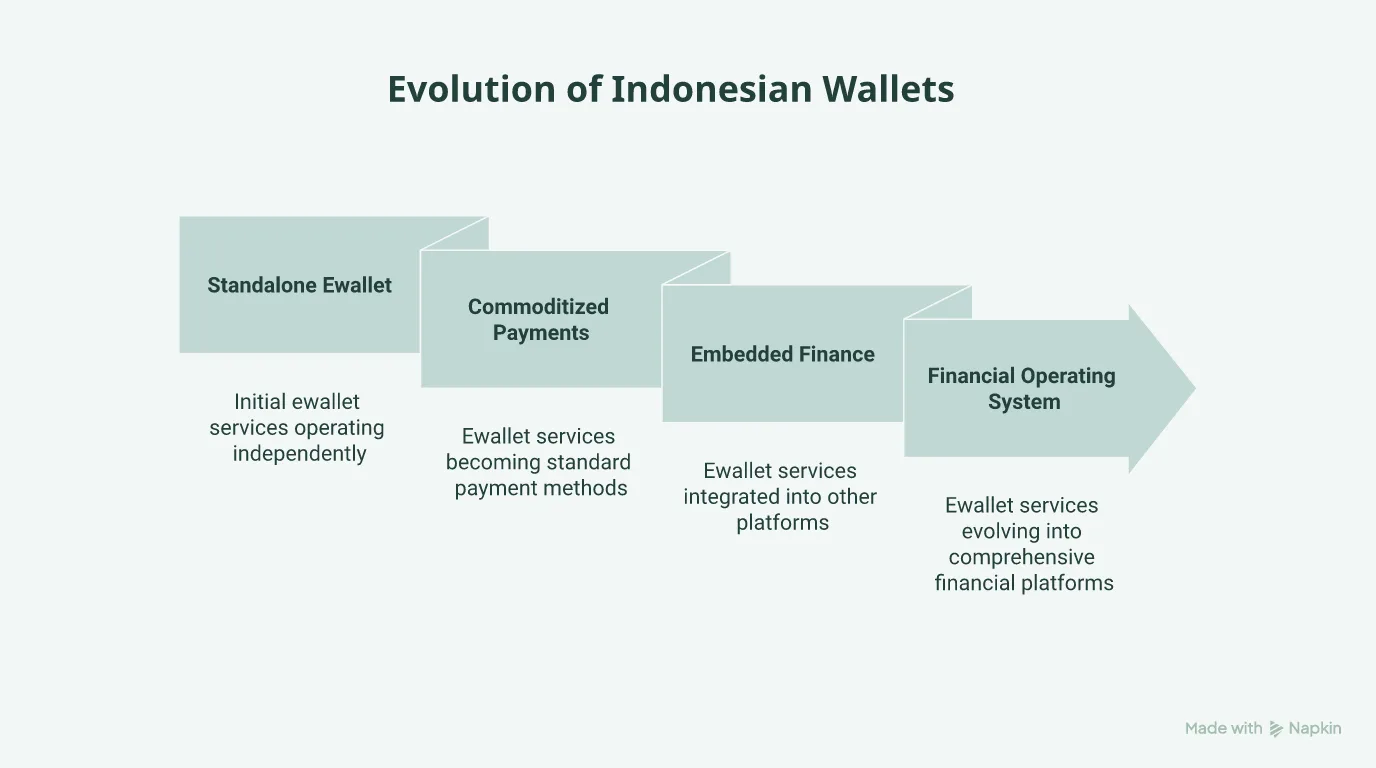
The structural evolution of the Indonesian market demonstrates a definitive shift. With the nationwide enforcement of the Quick Response Code Indonesian Standard (QRIS) and the BI-FAST real-time transfer infrastructure, the regulatory environment has commoditized basic digital transactions. The underlying payment rails are universally accessible and interoperable. You can no longer compete solely on payment processing execution or peer-to-peer transfer capabilities. The competitive frontier has decisively shifted toward embedded finance. I’d argue that the future belongs not to the best payment app, but to the platform that successfully evolves into a comprehensive financial operating system.
Key takeaways
- Payment rails are commoditized: Ubiquitous infrastructure like QRIS and BI-FAST means wallets can no longer compete on transaction execution alone.
- The superapp-bank synergy: Integrating digital wallets with fully licensed digital banks solves the unit economics problem, converting high acquisition costs into low-cost deposits.
- Credit is the new margin: Algorithmic underwriting, fueled by proprietary transaction data, transforms transient users into high-yield, durable lending customers.
- Cross-border interoperability: The next expansion vector is regional, using bilateral QR linkages to capture high-margin foreign exchange revenue without intermediate networks.
The Consolidation of the Market
The market is no longer defined by fragmented, proprietary stored-value applications. The Indonesia Payment System Blueprint (BSPI) 2030 institutes reforms designed to enforce risk-based access and entry requirements, pushing the industry toward consolidation. Consequently, smaller, standalone platforms face insurmountable compliance and operational costs, accelerating market concentration among the top dominant players.
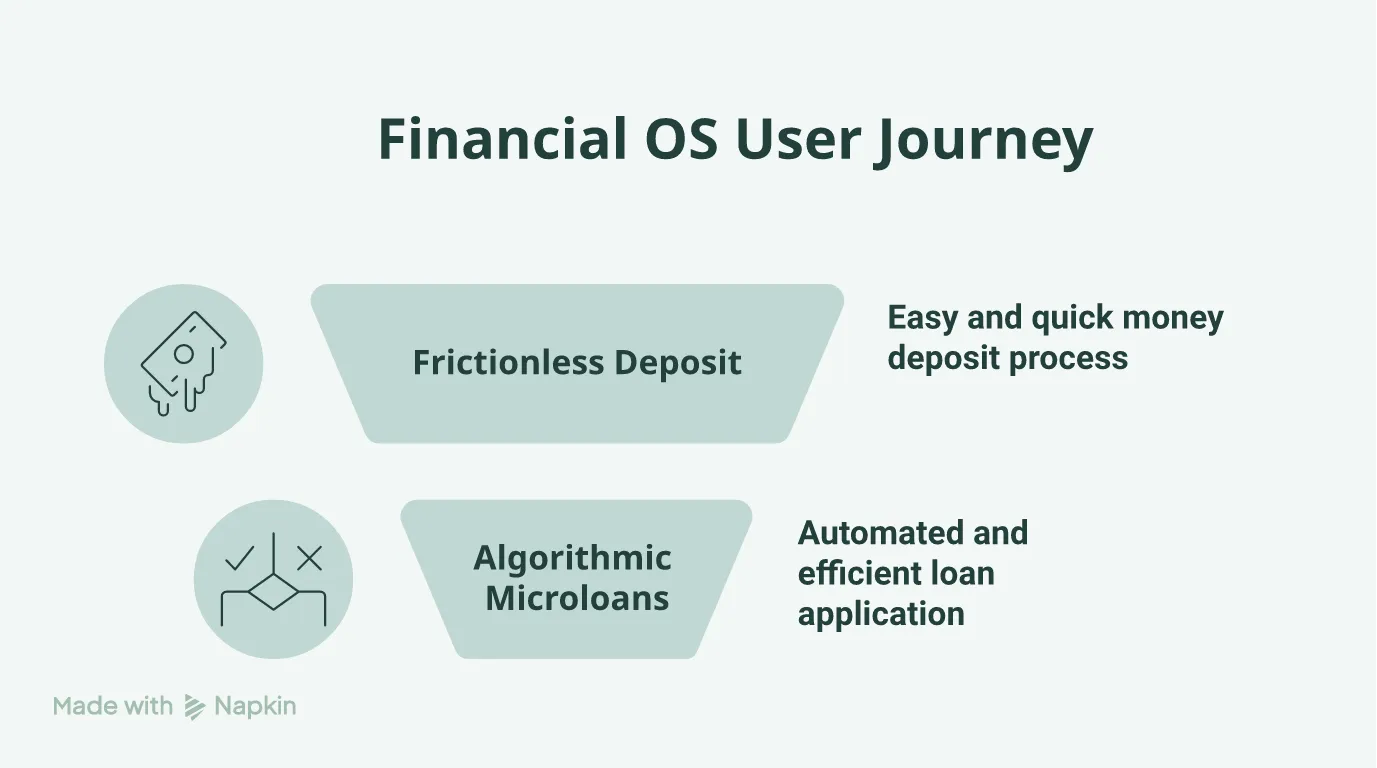
This consolidation forces a strategic pivot. To survive, Tier-1 platforms must transition from closed-loop proprietary silos to open, interoperable networks. The integration models that are emerging, where a superapp acts as the front-end interface for a fully licensed digital bank, have successfully solved the industry’s greatest historical challenge. They convert high customer acquisition costs into durable, high-margin customer lifetime value. By using the superapp as a frictionless engagement funnel to capture low-cost deposits, and subsequently deploying algorithmic credit models to distribute micro-loans, these platforms build impenetrable financial moats.
Solving the Unit Economics Equation
Historically, e-wallets expended massive amounts of capital on customer acquisition through subsidies, only to capture fractional basis points on transaction fees. Furthermore, regulatory ceilings on e-money float balances severely limited the total liquidity held within the network.
By acquiring or integrating with fully licensed digital banks, superapps fundamentally alter their profitability. The superapp serves as a zero-friction distribution channel, migrating millions of transactional wallet users into formal banking depositors. A 2026 comparative analysis of integrated digital banks indicates that this approach yields an exceptionally low cost of funds. For example, SeaBank recorded a net profit of IDR 678.4 billion in 2025, a 79% year-on-year growth driven largely by its smooth integration with ShopeePay. This funnel resulted in a captive deposit base of IDR 34.8 trillion in third-party funds.
When you control both the interface and the underlying banking ledger, the friction of moving money disappears. Users can open accounts, top up balances, and process smooth checkouts without ever leaving the app. This eliminates administrative fees and delays, creating a behavioral lock-in that traditional banks struggle to replicate.
Algorithmic Credit and Proprietary Data Moats
As fundamental payment rails become commoditized, the margin shifts to credit. However, traditional credit underwriting relies on historical banking data, which excludes vast segments of the unbanked and underbanked population. The financial operating system circumvents this limitation by using its proprietary data moat.
Platforms operating closed-loop liquidity networks, where consumers top up balances for daily commutes and food deliveries, while partners receive earnings directly into the same app, capture granular data on both consumer spending habits and merchant cash flows. This bidirectional flow of funds provides the behavioral collateral necessary for precision credit underwriting.
By analyzing geospatial stability, transaction frequency, and device metadata, algorithms can securely extend credit to demographics previously deemed too opaque. This is actively deployed in products that segment user liquidity to maximize retention. Features allowing freelancers and driver-partners to segregate cash flows, alongside flexible savings pockets yielding up to 3.25% per annum, transform the wallet from a spending tool into an essential mechanism for financial resilience. The data shows that when users rely on a platform to manage economic shocks and smooth out cash flow volatility, they become the most loyal and active participants.
The Regional Expansion Vector
While domestic wallets fight for localized retail share, the broader strategic horizon extends across Southeast Asia. The macroeconomic shift toward regional payment networks, moving away from dependence on Western card networks, presents a massive opportunity for platforms capable of cross-border interoperability.
Bank Indonesia has actively championed cross-border QRIS interconnectivity, establishing bilateral linkages with Malaysia, Singapore, Thailand, and South Korea. Furthermore, the mid-2026 launch of a cross-border QR linkage with China enables direct local currency settlement, effectively eliminating intermediary currency fees.
The financial operating system uses this shift by converting smartphones into secure, all-in-one payment terminals for the regional traveler. By allowing users to link a single card and scan local national QR standards across different ASEAN countries without manual wallet top-ups or excessive foreign exchange fees, platforms generate high-margin revenue while cementing dominance among high-value consumers.
The Architecture of Trust
Transitioning from a simple e-wallet to a comprehensive financial operating system places high demands on back-office operations. To support high-frequency, low-latency operations while ensuring absolute data integrity, platforms must engineer highly concurrent, distributed double-entry ledger systems.
The legacy architecture of single-entry ledgers, susceptible to race conditions and “ghost money,” is entirely inadequate for the scale and regulatory scrutiny of the modern era. Authorities mandate that customer funds must be hermetically shielded from corporate operational risks. This requires continuous, automated three-way reconciliation pipelines bridging the internal core ledger, the external payment processor, and the safeguarding bank account.
I’d argue that the platforms dominating the Indonesian digital economy moving forward are those that view architectural integrity and proactive regulatory compliance not as operational constraints, but as the indispensable foundation required to build absolute consumer trust. Strategy without execution is just running in circles. For the product leader managing this transition, the path forward requires treating the infrastructure itself as the core product feature that serves as the foundation enabling autonomous transactions via agentic wallets.
References
- Ipsos. (2026). PRESS RELEASE Peta Persaingan Dompet Digital 2026, Siapakah Dompet Digital yang Unggul Menjadi Pilihan Pengguna Menurut Survei I. https://www.ipsos.com/en-id/mapping-digital-wallet-landscape-2026-which-platform-leads-users-preferred-choice-according-ipsos
- GlobeNewswire. (2026). Indonesia Prepaid Card and Digital Wallet Intelligence Report 2026.
Frequently asked questions
Why are standalone digital wallets no longer economically viable in Indonesia?
The commoditization of basic payment rails via QRIS and BI-FAST means wallets cannot compete on transaction execution alone. Rising regulatory compliance costs and the inability to monetize transactions without a lending component force platforms to integrate with fully licensed digital banks.
How do superapps use their data moats for credit underwriting?
Superapps capture granular data on consumer spending habits, geospatial stability, and merchant cash flows. They feed this bidirectional transaction telemetry into machine-learning algorithms to securely underwrite micro-loans and BNPL facilities for users lacking traditional credit histories.
What is the strategic value of cross-border QR interoperability?
Cross-border QR linkages allow wallets to settle transactions directly in local currencies, bypassing traditional card network interchange fees. This generates high-margin foreign exchange revenue and cements the platform's position as the default financial interface for regional travelers.