Why Where You Sell Changes How You Sell to Gen Z
E-shop location shifts Gen Z buyer behavior. Marketing and trust strategies that succeed domestically often fail when applied to international expansion.
Most product teams assume that consumer behavior drivers, like brand trust, loyalty, and the impact of marketing, function uniformly across global digital platforms. The conventional wisdom dictates that a good product paired with a strong digital campaign will convert users regardless of where the platform is based. This is an undercorrection. We consistently underestimate how heavily the geographic origin of an e-commerce platform alters the psychological calculus of a Gen Z consumer, especially for high-involvement, newly launched technological products.
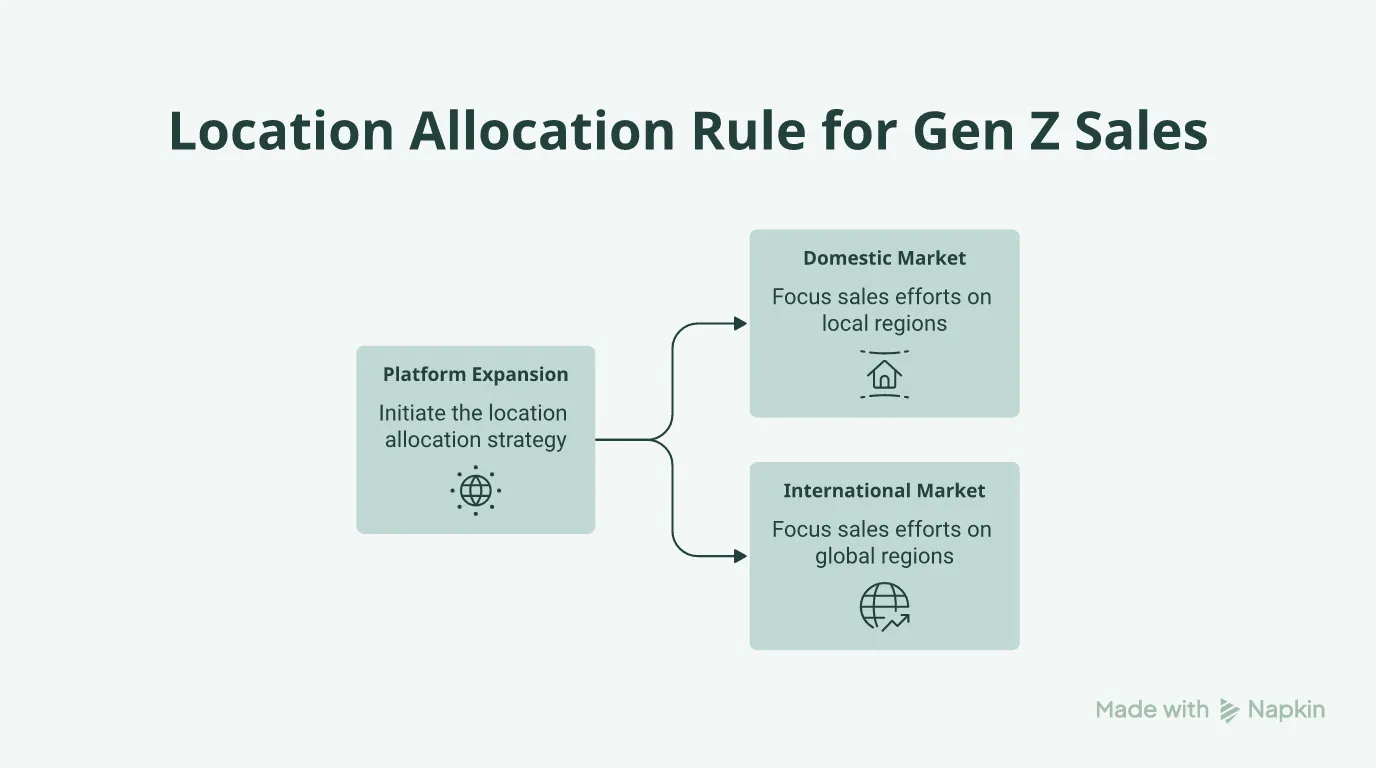
A 2025 study analyzing Gen Z’s online buying behavior for emerging tech products found that the location of the e-shop, domestic versus international, acts as a hard boundary condition on established behavioral models. The assumption that a unified global strategy works for digitally native consumers misses a critical reality. The effectiveness of marketing and the weight of social proof shift dramatically the moment a consumer crosses a digital border. This evidence demands a specific decision framework that product teams must adopt: the Location Allocation Rule. You must weight top-of-funnel marketing heavily for international launches, where the impact multiplier is five times higher. Domestically, you shift that capital toward post-purchase logistics and retention where baseline trust already exists.
The Marketing Impact Gap
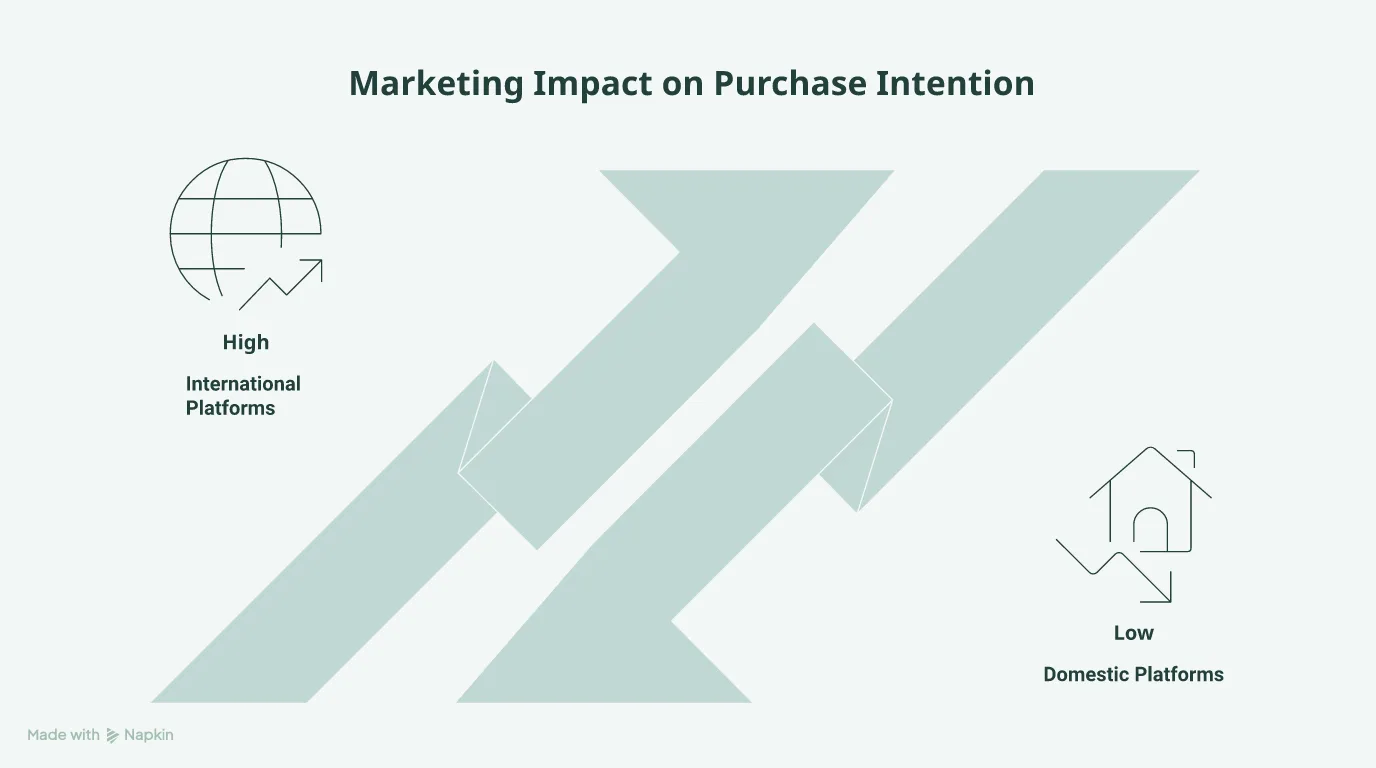
The data reveals a stark divergence in how marketing and advertising drive purchase intention. For domestic platforms, the influence of marketing on Gen Z’s purchase intention is almost entirely flat. When shopping locally, Gen Z relies heavily on cultural familiarity, pre-existing brand narratives, and logistical convenience. They do not need high-impact advertising to make a decision. The research quantified this reality: for domestic e-shops, the effect of marketing on purchase intention is negligible (b = 0.1885), explaining a mere 2.1 percent of the variance in intention.
International e-shops face an entirely different set of rules. The relationship between marketing impact and purchase intention becomes highly significant across borders. Foreign platforms signal innovation, exclusivity, and global appeal, but they also trigger higher perceived risks regarding authenticity and customer support. Creative, high-impact digital advertising and influencer endorsements become essential levers to reduce that uncertainty. For international platforms, the effect size jumps to b = 0.9342. Marketing and advertising suddenly explain 73 percent of the variation in purchase intention. This represents a nearly fivefold multiplier in effectiveness. Teams driving global expansion must recognize that the promotional sophistication required to convert an international user is fundamentally different than what works at home. This dynamic is closely tied to why access does not guarantee participation in emerging markets.
Social Proof as the Conversion Engine
Getting a Gen Z consumer to intend to purchase is only half the battle. Converting that intention into an actual purchase requires a different mechanism entirely: social proof. The study found that actual purchase behavior shows the strongest correlation with social and peer influences (r = 0.583) out of all measured factors. For Gen Z, the final hurdle before checkout is rarely price or feature set; it is peer validation.
This insight directly shapes how a product manager should spend engineering tickets. You cannot rely on brand authority alone to close the sale. The product itself must integrate user-generated content, friend-of-a-friend validation, and visible electronic word-of-mouth (e-WOM). When expanding internationally under the Location Allocation Rule, these social proof mechanisms must be front and center. A foreign brand asking for a high-value tech purchase needs localized peer validation to overcome the inherent geographic trust deficit. Domestically, social proof remains important, but it serves more as a reinforcement of existing cultural familiarity rather than the primary bridge over a trust gap.
Post-Purchase Behavior and Generational Values
The moderation effect of e-shop location extends deeply into what happens after the checkout screen. Gen Z characteristics, like digital nativeness, environmental values, and a demand for authenticity, positively influence post-purchase engagement. They leave reviews, share unboxing experiences on social media, and demonstrate public loyalty. This relationship is dramatically stronger for international e-shops than for domestic ones.
When Gen Z consumers buy from foreign platforms, they expect a compelling, values-aligned post-purchase experience. They engage in brand advocacy only if the international platform meets their high expectations for personalized communication and digital community-building. The data supports this behavioral shift: the effect of Gen Z traits on post-purchase behavior is three times stronger internationally (b = 0.9642) than locally (b = 0.2891). These traits explain 40.6 percent of the variance in post-purchase engagement abroad, compared to just 4.8 percent domestically.
Local retailers benefit from a baseline of trust, but their ability to activate these specific Gen Z traits after the sale is remarkably weak unless they deliberately engineer the experience. The domestic post-purchase journey often devolves into raw utility, did the product arrive on time, and does it work? The international journey remains highly evaluative. The consumer demands ongoing validation of the brand’s stated values long after the transaction clears.
Operationalizing the Divide
Understanding that location moderates behavior changes the actual requirements for the product and the platform. The Location Allocation Rule forces a rethink of how you deploy scarce engineering and marketing capital.
If you are a domestic brand targeting local consumers, sinking heavy investment into pre-purchase digital advertising yields diminishing returns. Your product focus must shift toward frictionless checkout, transparent local logistics, and immediate customer support. The baseline trust is already present. The product simply needs to honor that trust without introducing friction.
If you are expanding internationally, the platform must do the heavy lifting of trust acquisition. The product requires tighter integration with influencer content, richer multimedia representations of the product, and highly visible social proof mechanisms. After the sale, the international platform cannot afford to go quiet. It must prompt reviews, offer digital badges or rewards for advocacy, and maintain a narrative that aligns with global Gen Z values.
The strategy cannot remain geographic-agnostic. Treating international expansion as a pure translation and logistics problem ignores the shifting psychology of the buyer. The platform that wins globally adapts its trust architecture and marketing intensity to the specific anxieties and expectations of the cross-border consumer.
References
- Theocharis, D., Tsekouropoulos, G., Hoxha, G., & Simeli, I. (2025). Location-Based Moderation in Digital Marketing and E-Commerce: Understanding Gen Z’s Online Buying Behavior for Emerging Tech Products. Journal of Theoretical and Applied Electronic Commerce Research, 20(1), 161. https://doi.org/10.3390/jtaer20030161
Frequently asked questions
Why doesn't a successful domestic marketing strategy translate to international e-shops for Gen Z?
Domestic platforms benefit from cultural familiarity and logistical trust, making heavy advertising less critical for conversion. In contrast, international platforms face higher perceived risks and require high-impact, persuasive marketing to build the necessary trust and purchase intention.
How does e-shop location affect post-purchase behavior?
Gen Z's post-purchase engagement, like advocacy and leaving reviews, is much stronger for international purchases. They expect a more sophisticated, values-aligned follow-up experience from global brands compared to local retailers.
What should product teams change about their international expansion strategy?
Teams must treat the e-shop's location as a core variable that moderates user behavior. This means shifting marketing spend toward trust-building and high-impact advertising abroad, while focusing on community and convenience domestically.