Why Access Does Not Guarantee Participation in Emerging Markets
Expanding into emerging markets requires more than an app. True participation depends on algorithmic visibility, spatial equity, and financial resilience.
The standard playbook for expanding digital products into emerging markets often relies on a flawed assumption: that access equals adoption. The conventional wisdom dictates that if you get the application onto a user’s smartphone, subsidize the first few transactions, and simplify the onboarding flow, network effects will inevitably take over. But the reality on the ground tells a much different story. Whether examining the informal street food markets of Central Java or the digital wallet ecosystems across Southeast Asia, access is merely the starting line. True platform participation is heavily mediated by algorithmic visibility, spatial inequality, and a user’s capacity to absorb financial shocks.
Building for these markets requires moving past the illusion of a frictionless digital experience and designing for the complex socioeconomic realities that dictate who actually gets to participate in the digital economy. As we’ve seen, financial inclusion is fundamentally a product problem, not just a distribution challenge.
Key takeaways
- Geography dictates digital destiny: Physical location and algorithmic visibility often predict platform adoption more strongly than an individual’s digital readiness.
- Resilience drives retention: The capacity to absorb financial shocks is the primary mechanism that converts digital literacy into sustained platform usage.
- The AI literacy paradox: In weakly regulated environments, educating users about AI actually decreases adoption by heightening their perception of algorithmic risk.
- Economics exclude the margins: Standardized commission structures disproportionately burden informal workers, creating a capital-driven divide in digital participation.
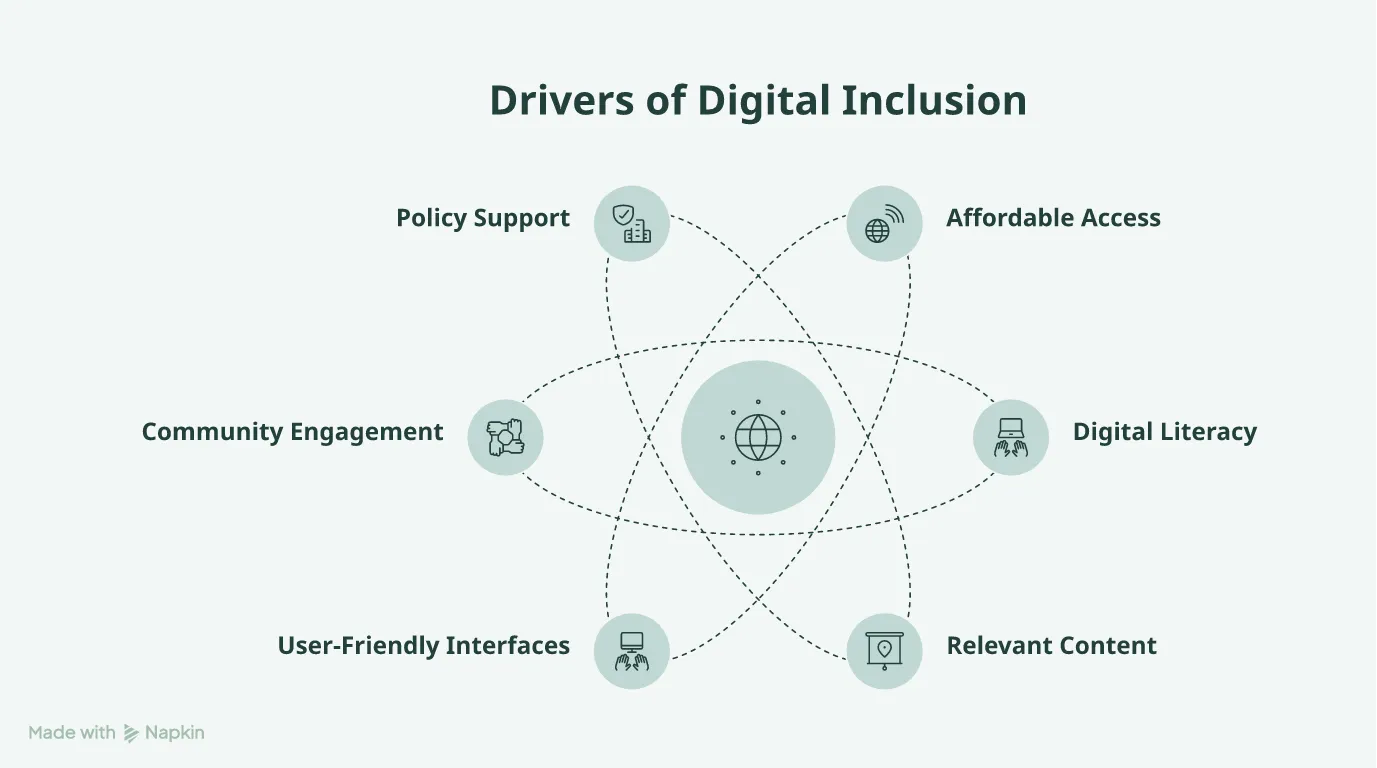
The Spatial Reality of Digital Inclusion
The platform economy is frequently framed as a democratizing force that flattens geographic boundaries. However, digital infrastructure is not spatially neutral; it actively privileges central, well-connected areas while leaving the periphery algorithmically invisible.
A 2026 study of 335 street food vendors in Surakarta, Indonesia, starkly illustrated this divide. The research found that vendors located in the city center were nearly twice as likely (OR = 1.88) to adopt online food delivery platforms compared to those operating on the urban fringe. This gap persists regardless of the vendor’s age, gender, or educational background. Digital platforms operate through proximity-based sorting, customer density metrics, and delivery logistics that inherently favor urban cores.
This underscores a major blind spot in expansion strategies. When algorithms prioritize delivery speed and dense geographic clusters, they structurally exclude peripheral users. Addressing this requires rethinking how platforms rank and surface participants, ensuring that growth metrics do not inadvertently redline the very users the platform intends to serve.
The Asymmetric Burden of Platform Economics
The cost of participating in the digital economy often outweighs the promised benefits for marginal users, creating an inclusion divide driven primarily by capital endowment rather than technological friction.
The Surakarta study revealed that financial stability is a prerequisite for digital adoption. Vendors earning over 6 million IDR monthly were 1.6 times more likely to adopt delivery platforms than those earning under 3 million IDR. Furthermore, the economic model of these platforms, which often extract flat commission rates of 20% to 30% per transaction, places an asymmetric burden on smaller vendors operating with razor-thin margins.
This dynamic forces a reevaluation of how platforms monetize in emerging markets. Growth strategies that rely on standardized, one-size-fits-all take-rates will inevitably plateau once they exhaust the tier of merchants who can absorb the margin hit. To achieve deep market penetration, platforms must design tiered or value-based pricing models that accommodate the extreme heterogeneity of the informal economy. Unit economics must be solved for the user before they can solve the network liquidity for the platform, much like the dynamic observed when exploring why adoption isn’t access for the next 140 million wallet users.
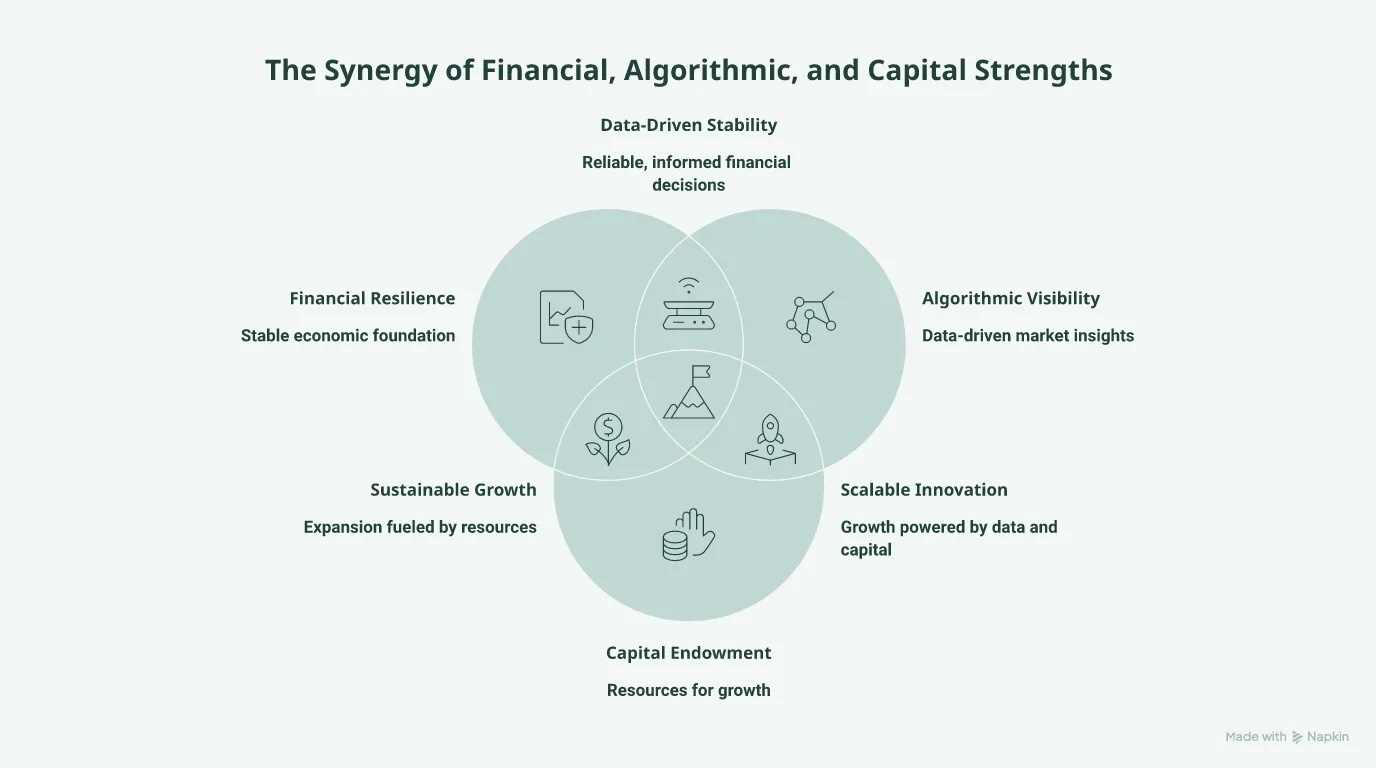
Financial Resilience as the Conversion Mechanism
There is a persistent belief that if you improve digital financial literacy, active platform usage will naturally follow. However, digital skills alone do not create active users; the ability to manage liquidity and absorb financial shocks is what actually sustains engagement.
A comprehensive 2026 comparative study of 1,150 respondents across Malaysia and Indonesia demonstrated that financial resilience is the central behavioral mechanism linking digital literacy to sustained inclusion. The research showed that the capacity to plan ahead, manage debt, and access emergency funds significantly enhanced digital financial inclusion (β = 0.177 in Indonesia and β = 0.237 in Malaysia). Without this adaptive capacity, technological tools are rapidly abandoned at the first sign of a financial shock.
This means that fintech applications must build resilience directly into the interface. Features like micro-savings auto-sweeps, adaptive budgeting dashboards, and predictive liquidity alerts are not secondary enhancements; they are the behavioral scaffolding required for sustained engagement. A product that only facilitates transactions without buffering against volatility will suffer from chronic churn in emerging markets.
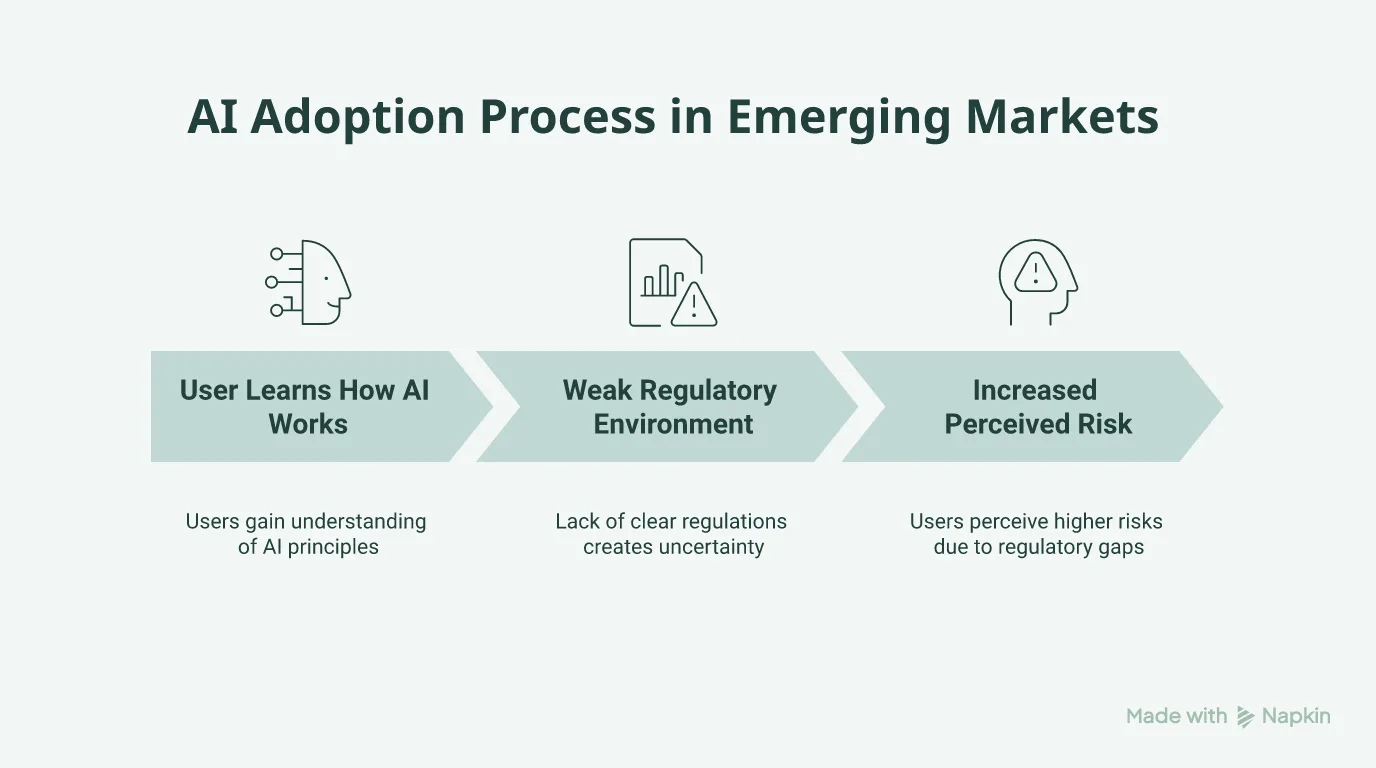
The AI Literacy Paradox in Emerging Markets
As platforms increasingly integrate algorithmic credit scoring and automated recommendations, the instinct is to educate users on how these AI systems work. Yet, the data reveals a counterintuitive reality: increasing AI literacy can actually depress platform adoption if the surrounding regulatory environment is weak.
The comparative Southeast Asian study uncovered a striking asymmetry regarding AI awareness. In Indonesia, a market characterized by more fluid regulatory oversight, higher AI literacy had a significant negative effect on digital financial inclusion (β = –0.187). Greater awareness of how algorithmic systems operate heightened users’ perceptions of data misuse, discriminatory outcomes, and opacity, actively discouraging their participation. Conversely, in Malaysia, where digital governance and consumer protection are more established, this negative effect was mitigated.
This paradox presents a profound challenge for AI product design. Transparency without strong institutional safeguards generates anxiety, not trust. The next iteration of applications cannot rely on technical explainability alone to win over skeptical users. Instead, they must design trust-enabling interfaces that simplify risk signals and emphasize user agency, ensuring that algorithmic transparency serves as a bridge to confidence rather than a spotlight on vulnerability.
References
- Amin, C., Sigit, A. A., Saputra, A., Samson, M. G. M., & Sattar, F. (2026). Beyond access: Understanding digital platform adoption in Indonesia’s informal economy. Digital Geography and Society, 10, 100162. https://doi.org/10.1016/j.diggeo.2026.100162
- Sabri, M. F., Trinugroho, I., Magli, A. S., Law, S. H., Wahyono, B., Ridhwan, M. M., & Septianto, F. (2026). Bridging digital capabilities and financial resilience: A comparative study of FinTech, AI literacy, and financial inclusion among households in Malaysia and Indonesia. Journal of Open Innovation: Technology, Market, and Complexity, 12, 100759. https://doi.org/10.1016/j.joitmc.2026.100759
Frequently asked questions
Why is digital platform adoption uneven in emerging markets?
Adoption is heavily skewed by spatial inequality and algorithmic visibility. Platforms tend to prioritize central, well-connected urban areas, structurally excluding users on the urban fringe regardless of their individual digital readiness.
How does financial resilience affect fintech usage?
Financial resilience, the ability to manage liquidity and absorb economic shocks, is the primary mechanism that converts digital literacy into sustained usage. Users who cannot buffer against financial volatility tend to abandon digital platforms, making resilience-building features essential for retention.
Does increasing AI literacy improve user trust in digital products?
Not automatically. In markets with weak regulatory frameworks, educating users about AI actually decreases adoption because it heightens their awareness of algorithmic risks and data misuse. Transparency must be paired with strong institutional safeguards and user-centric design to build genuine trust.