How Trust Became the Indonesian Wallet's Ultimate Moat
With AI-driven deepfake fraud surging 1,550%, the traditional compliance checkbox is no longer enough. Trust and fraud defense must become the product itself.
When a user onboards onto a digital wallet, they hold up their ID and blink at the camera, satisfying the electronic Know Your Customer (e-KYC) requirement. But the user isn’t a human, it’s a synthetic, AI-generated deepfake video stream injected directly into the application’s camera API, entirely bypassing the physical camera. As generative AI matures, this kind of presentation and injection attack has skyrocketed.
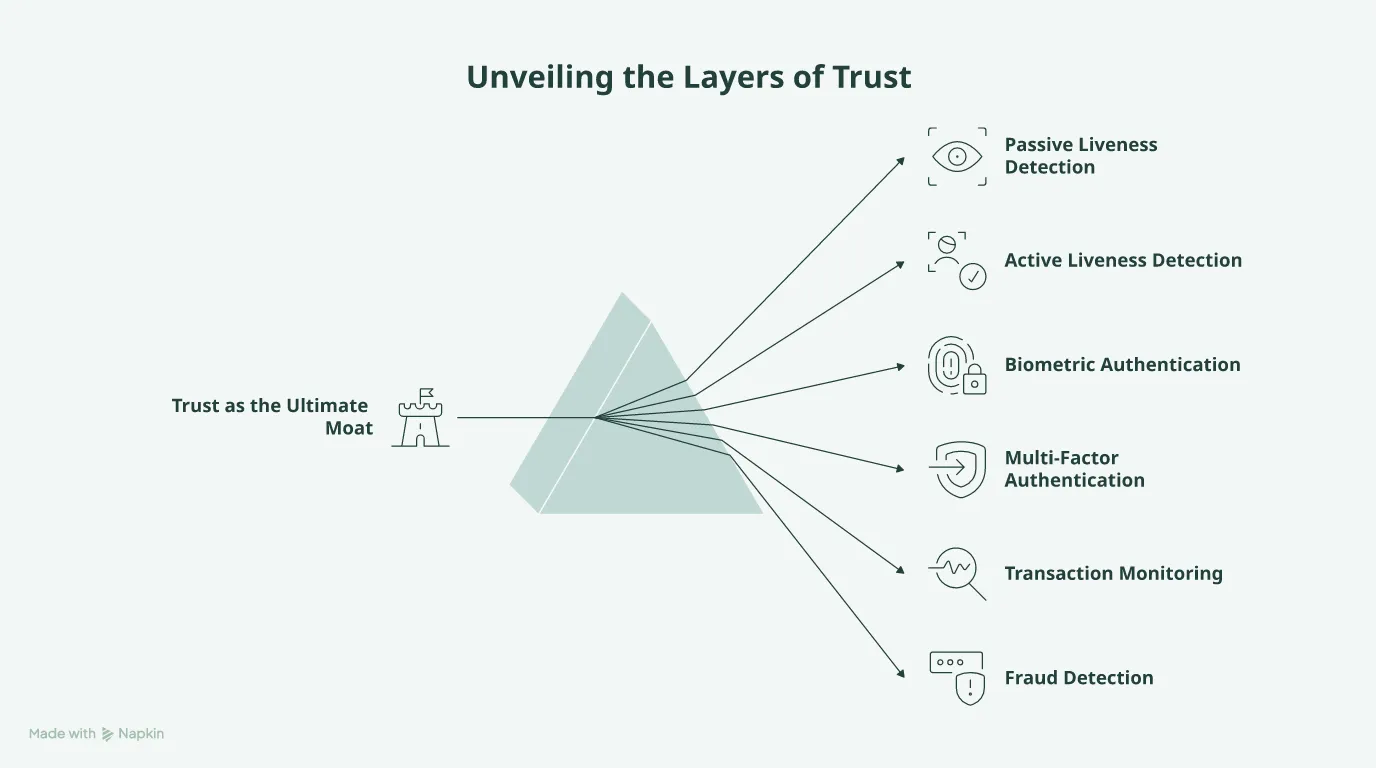
For years, the product roadmap for digital wallets treated security as a regulatory tax, a baseline compliance checkbox to clear before getting back to building features. But that assumption is dangerously undercorrecting for the reality of modern financial infrastructure. When AI-driven deepfake fraud within the fintech sector surges by 1,550%, the threat compounds faster than static rules can adapt. In this deepfake era, the compliance baseline is no longer sufficient. Trust and fraud defense are no longer just guardrails; they are the product itself.
Key takeaways
- Compliance is a floor, not a ceiling: Relying solely on static regulatory thresholds leaves wallets vulnerable to sophisticated, AI-driven injection attacks and on-device fraud.
- Friction as a feature: Transitioning from binary transaction blocking to “smart friction” introduces psychological disruption that breaks social engineering loops while maintaining user agency.
- Structural assurance drives disclosure: Users are more willing to disclose necessary sensitive information when the platform transparently communicates its structural security and privacy measures.
- Trust is the competitive moat: In a hyper-saturated market, the wallet that reliably protects its users, and clearly signals how it does so, wins the consolidation game.
The Limits of the Compliance Checkbox
The Indonesian digital payments market is projected to reach USD 256.45 billion by 2030, driven by smartphone ubiquity and standardized infrastructures like QRIS. But this unprecedented scale introduces asymmetric vulnerabilities. Unregistered wallets, which require no biometric ID and are capped at an IDR 2,000,000 balance, are frequently exploited by criminal networks using “smurfing” tactics to structure illicit deposits and avoid reporting thresholds.
When the industry upgrades users to registered status to unlock higher transaction limits, it relies heavily on e-KYC. Historically, this meant active liveness detection, where the user is prompted to blink or nod. However, sophisticated generative adversarial networks (GANs) can now simulate these scripted movements in real time. The industry is entering an era where relying on static identity verification is akin to trying to secure a non-deterministic AI agent with a traditional firewall. As highlighted by Google research on securing autonomous coding agents, static identity acts as a poor perimeter in a fluid environment; trust must be continuously earned, verified, and dynamically enforced based on runtime context.
Moving from Active Obstacles to Passive Security
If the traditional compliance baseline is insufficient, what replaces it? The answer lies in redesigning the architecture of trust. The tension between rigorous security and optimal user experience is most pronounced during onboarding. High friction increases cognitive load and drives up abandonment rates.
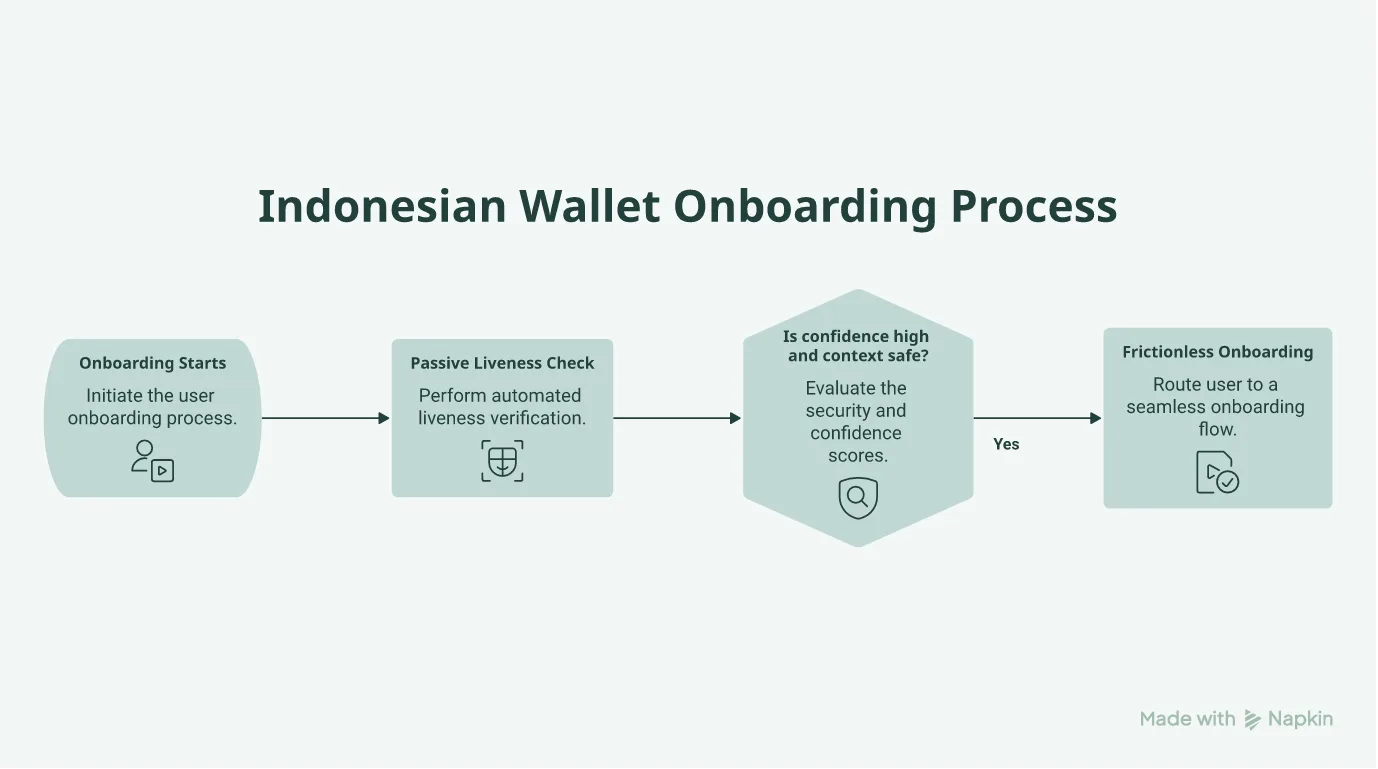
To resolve this paradox, top-tier platforms are shifting toward passive liveness detection. This frictionless security control verifies human presence from a single captured frame or invisible background video, requiring no specific user gestures. It maximizes onboarding completion rates while remaining highly resilient to deepfakes, as the algorithms detect synthetic textures and micro-movements missed by the human eye.
But passive security alone isn’t enough. When a platform’s risk decisioning matrix detects contextual anomalies, such as a known risky device fingerprint or a borderline passive liveness score, it dynamically routes the user to active step-up challenges. This adaptive approach ensures legitimate users experience zero friction, while high-risk sessions face interactive scrutiny.
Designing Smart Friction into the Product
The true innovation in modern risk architecture lies in how risk decisions are communicated to the user. Traditional fraud interventions are binary: a transaction is hard-blocked, the account is frozen, and the user enters a lengthy manual review. This archaic approach yields high false-positive rates and severe brand degradation.
Instead, risk policy must be translated into dynamic product features. One prominent example is “Smart Friction.” Rather than immediately declining a transaction that algorithmically aligns with a social engineering scam or online gambling profile, the platform intentionally introduces targeted friction. An interstitial warning screen intercepts the flow, explicitly alerting the user to the recipient’s risk profile and forcing them to deliberately choose to proceed or cancel.
This product-led intervention serves multiple goals. It provides psychological disruption, breaking the cognitive momentum of a user caught in an addictive loop or high-pressure manipulation. As noted in a 2025 industry report on Southeast Asian wallet compliance, DANA successfully leveraged this Smart Friction technology to reduce online gambling-related transactions on its platform by an impressive 80%. It also shifts liability and mitigates false positives, if the transaction is legitimate, the user is merely inconvenienced by an extra tap, rather than suffering the severe friction of blocked funds.
Structural Assurance as the Growth Engine
The ultimate goal of these security measures is to foster user trust, which is the foundational currency of the broader financial OS transition. A 2024 study on information disclosure behavior in mobile payments found that when consumers perceive high privacy and security risks, their willingness to disclose sensitive information drops. However, structural assurance, the legal and technological safeguards embedded in the platform, significantly improves users’ trust.
When a wallet provider clearly communicates its structural assurances, it diminishes perceived information sensitivity. Users are willing to share their data if the perceived usefulness of the service outweighs the risks, and if they trust the system to protect them. This aligns with broader principles of designing trust into AI products: trust isn’t built solely by good results; it’s built on predictable behavior and transparent communication.
In a hyper-connected environment, risk architecture is no longer just a regulatory tax. It is the core competitive differentiator that guarantees consumer safety, making trust the ultimate product feature.
References
- Risk, Fraud, and Compliance Architecture for Digital Wallets in Southeast Asia: Indonesia Market Outlook 2025-2026. (2025).
- Kartakis, S., Eidelman, A., Bakkali, W., & Subasioglu, M. (2026). Vibe Coding Agent Security and Evaluation. Google.
- Khalek, S. A., Behera, C. K., & Samanta, T. (2024). An integrated framework for understanding information disclosure behaviour in mobile payment services. Journal of Financial Services Marketing, 29, 1077–1098. https://doi.org/10.1057/s41264-023-00257-1
- Macfadyen, L. (2026). Designing AI Interfaces. O’Reilly Media, Inc.
Frequently asked questions
What is Smart Friction in digital wallets?
Smart Friction is a product-led intervention that introduces an intentional pause or warning screen before a potentially risky transaction. It breaks the psychological momentum of social engineering scams while giving the user ultimate agency to proceed or cancel.
How do deepfakes affect mobile payment security?
Deepfakes enable malicious actors to bypass traditional biometric checks like active liveness detection by injecting synthetic, AI-generated video streams. This has driven the industry toward passive liveness detection, which analyzes synthetic textures and anomalies invisible to the human eye.
Why is structural assurance important for digital wallets?
Structural assurance provides users with the legal and technological safeguards necessary to trust a platform. When these assurances are transparently communicated, they lower the user's perceived risk, increasing their willingness to disclose required sensitive information.