Why the Async-First Operating Model Outscales Synchronous Teams
Async isn't a remote work concession, it is a deliberate operating model that outperforms synchronous cultures when designed purposefully.
The prevailing assumption among product leaders is that asynchronous communication is a fallback, a necessary compromise when distributed teams can’t be in the same room. But what if that assumption is entirely backward? What if an async-first approach isn’t a concession to remote work, but a superior operating model that scales better than the synchronous-default culture it replaces?
When organizations simply port their office habits to digital channels, trading meeting rooms for back-to-back Zoom calls, they hit a ceiling. According to Pew Research Center data cited in Corporate Communications: An International Journal (2026), roughly six-in-ten American workers (59%) whose jobs can mainly be done from home are choosing to work from home all or most of the time. Yet, the same data indicates that many of these teams report feeling less connected. The disconnect happens because true scale in distributed work requires deliberately designing for autonomy and structured communication, rather than relying on proximity and immediate responses.
Key takeaways
- Async is a design choice, not a fallback: Moving to distributed work without redesigning communication norms leads to burnout and coordination failure.
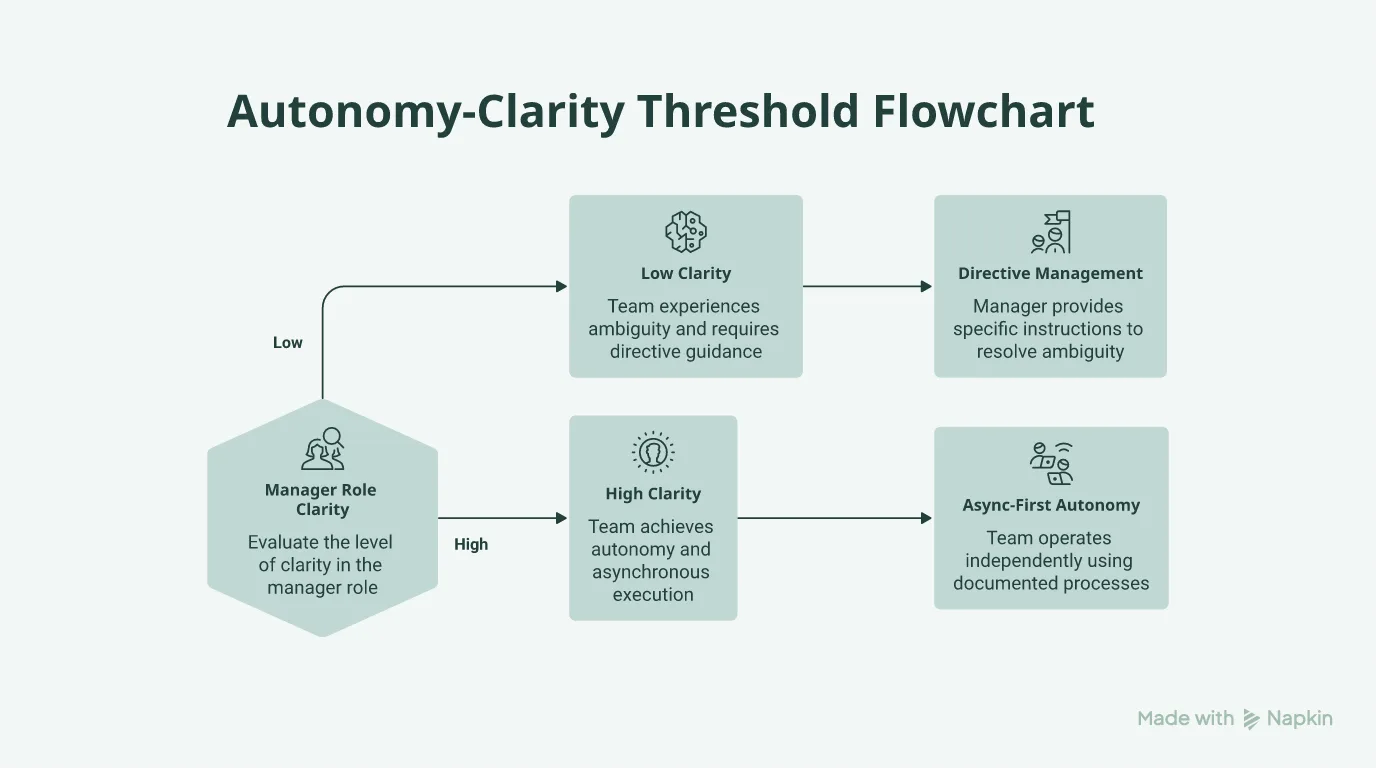
- The Autonomy-Clarity Threshold: This decision rule dictates that if a manager’s role clarity is low, autonomy must be capped to prevent fragmentation; if role clarity is high, autonomy can scale without degrading coordination.
- Autonomy has a curvilinear effect: A multilevel study (n=151 team members, 34 managers) confirms that too little autonomy causes micromanagement, while too much autonomy without structure leads to isolation.
- Richness is multimodal: Media richness in modern teams isn’t about a single channel; it requires a strategic combination of lean and rich tools tailored to the task complexity.
The Autonomy-Clarity Threshold
When team members are geographically dispersed, managers often instinctively tighten control to maintain coordination. Conversely, they may adopt a hands-off approach assuming remote workers want complete independence. A 2026 time-lagged, multisource field study in Personnel Review examined 34 managers and 151 of their distributed team members. The findings confirmed that the relationship between team autonomy and manager effectiveness is curvilinear. Too little autonomy breeds micromanagement and stifles agility, while too much unchecked autonomy leaves teams fragmented and uncoordinated. The researchers established this with a significant negative squared term for manager autonomy practice (-0.46, p < 0.05).
To operationalize this, I propose the Autonomy-Clarity Threshold. This decision rule states: if a manager’s own role clarity is low, team autonomy must be capped; if a manager’s role clarity is high, autonomy can scale. The data strongly supports this threshold. The interaction term between the quadratic term of manager autonomy practice and manager role clarity was significant and positive (1.23, p < 0.05). When leaders clearly understand their own mandates, they can define task boundaries and provide the necessary structure that allows autonomy to thrive. As discussed regarding Finding the Autonomy Sweet Spot in Distributed Teams, autonomy works best when matched with explicit guidance rather than laissez-faire abandonment. High role clarity flattens the negative curve of excessive autonomy.
Why Media Richness Still Matters for Remote Work
Deciding whether to send a Slack message or schedule a video call isn’t just about personal preference; it’s a structural decision that impacts team effectiveness. Research published in Corporate Communications: An International Journal (2026), based on a mixed-methods survey of remote workers (n=29), applied Media Richness Theory to modern remote teams. The study found that communication quality matters far more than mere volume when establishing connectedness.
The findings show that “richness” today is often multimodal. Lean, asynchronous media (like email or persistent chat) were frequently selected for routine coordination and documentation. In the study, 20 respondents preferred traditional lean media and 19 preferred messaging apps for peer coordination. Conversely, richer media (like video conferencing) are critical for ambiguity reduction and complex relational issues. However, organizations often err by forcing synchronous video for low-complexity updates, leading to fatigue and reduced productivity. The data indicates that video conferencing was the least frequently preferred channel for supervisor communication (only 8 respondents).
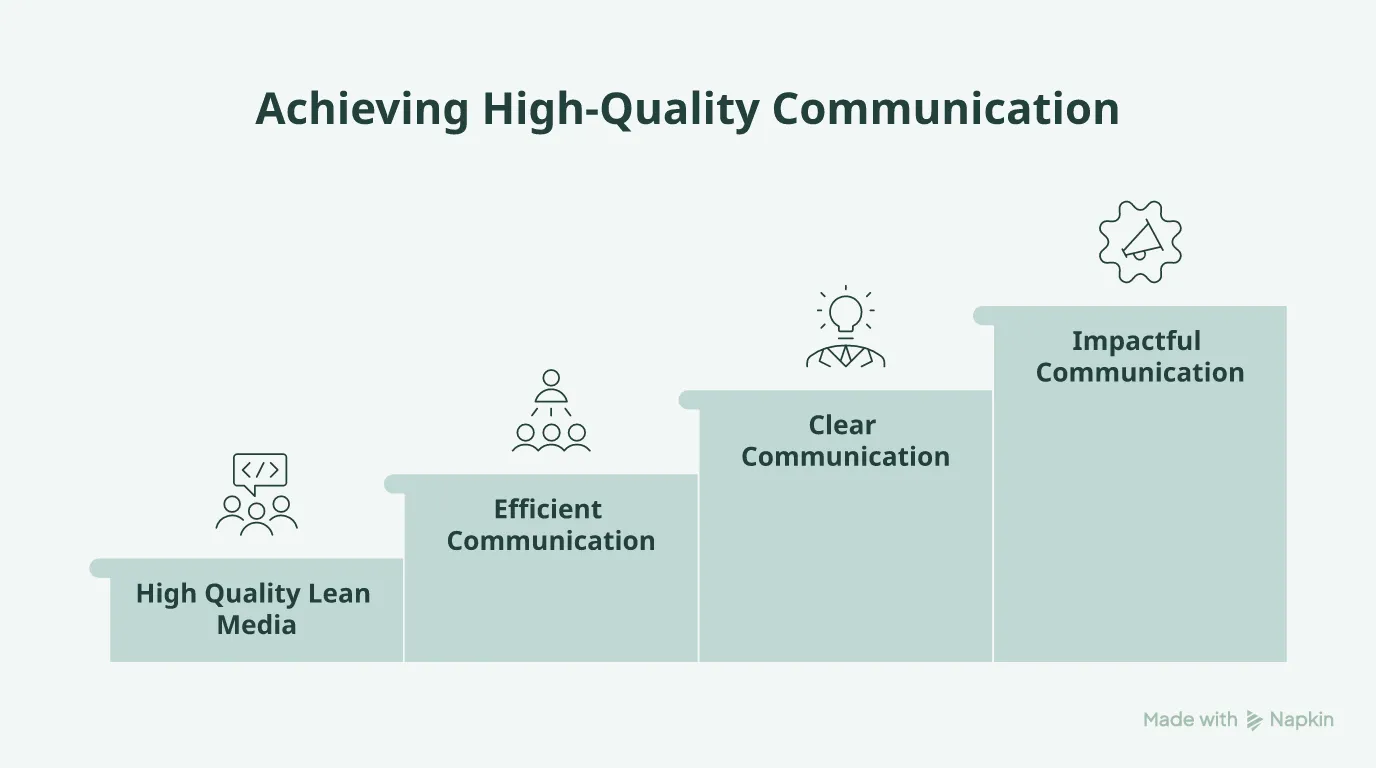
Moving from Spontaneous to Intentional Communication
In a physical office, much of the coordination happens through spontaneous, informal interactions. In a remote setting, this ad-hoc alignment disappears. A critical finding from the 2026 Corporate Communications study is that remote workers rely on a combination of traditional media and messaging apps, with their choices dictated by task demands rather than mere convenience. Participants explicitly noted that informal interactions were difficult to replicate, requiring more intentional effort.
To prevent feelings of disconnection, teams need intentional communication norms. This means replacing the “always-on” expectation with communication autonomy, allowing employees to manage the timing of their responses. The survey data revealed that technology-related disruptions, missed messages, and platform failures compound isolation. When organizations pair clear expectations with the flexibility to choose the right medium, they build a more resilient decision infrastructure that doesn’t rely on immediate synchronous availability. It shifts the burden from constant presence to high-quality output.
Designing the Async-First Culture
Treating async as a primary operating model requires redefining what good management looks like. The Personnel Review diary study of 150 distributed team workers over a two-week period (yielding 716 observations) highlights that frequent, daily electronic communication can actually build trust and improve coordination, provided it focuses on clarity rather than surveillance. The interaction between daily perceived autonomy squared and electronic communication was significant (0.44, p < 0.08), showing that communication buffers the risks of extreme autonomy.
Managers must shift from monitoring activity to managing outcomes. By establishing clear team goals and relying on asynchronous updates for routine progress, leaders can reserve synchronous time for high-value collaboration. This intentional design prevents the isolation that can accompany remote work. The async-first operating model ensures that the organization scales efficiently without the bottleneck of constant meetings, turning remote communication from a liability into a structural advantage.
References
- Wong, S. I., van Gils, S., Lei, W. S. C., & Černe, M. (2026). Daily team communication, manager role clarity and experienced autonomy in distributed teams. Personnel Review, 55(5), 1237-1258. https://doi.org/10.1108/PR-02-2025-0130
- Longo, S. A. (2026). Workplace communication in remote-based teams: a media richness approach. Corporate Communications: An International Journal. https://doi.org/10.1108/CCIJ-09-2025-0267
Frequently asked questions
Does an async-first model mean eliminating all meetings?
No. An async-first model relies on asynchronous communication for routine coordination and information sharing, reserving synchronous meetings for complex problem-solving, emotional connection, and reducing ambiguity.
How does manager role clarity affect remote team autonomy?
When managers clearly understand their own responsibilities, they can set explicit boundaries and expectations for their team. This structure prevents high autonomy from deteriorating into fragmentation or laissez-faire leadership.
Why do remote teams often feel disconnected despite constant messaging?
Disconnection stems from poor communication quality, not low volume. Unclear expectations, delayed responses to urgent matters, and a lack of intentional norms create isolation, even when message frequency is high.