Finding the Autonomy Sweet Spot in Distributed Teams
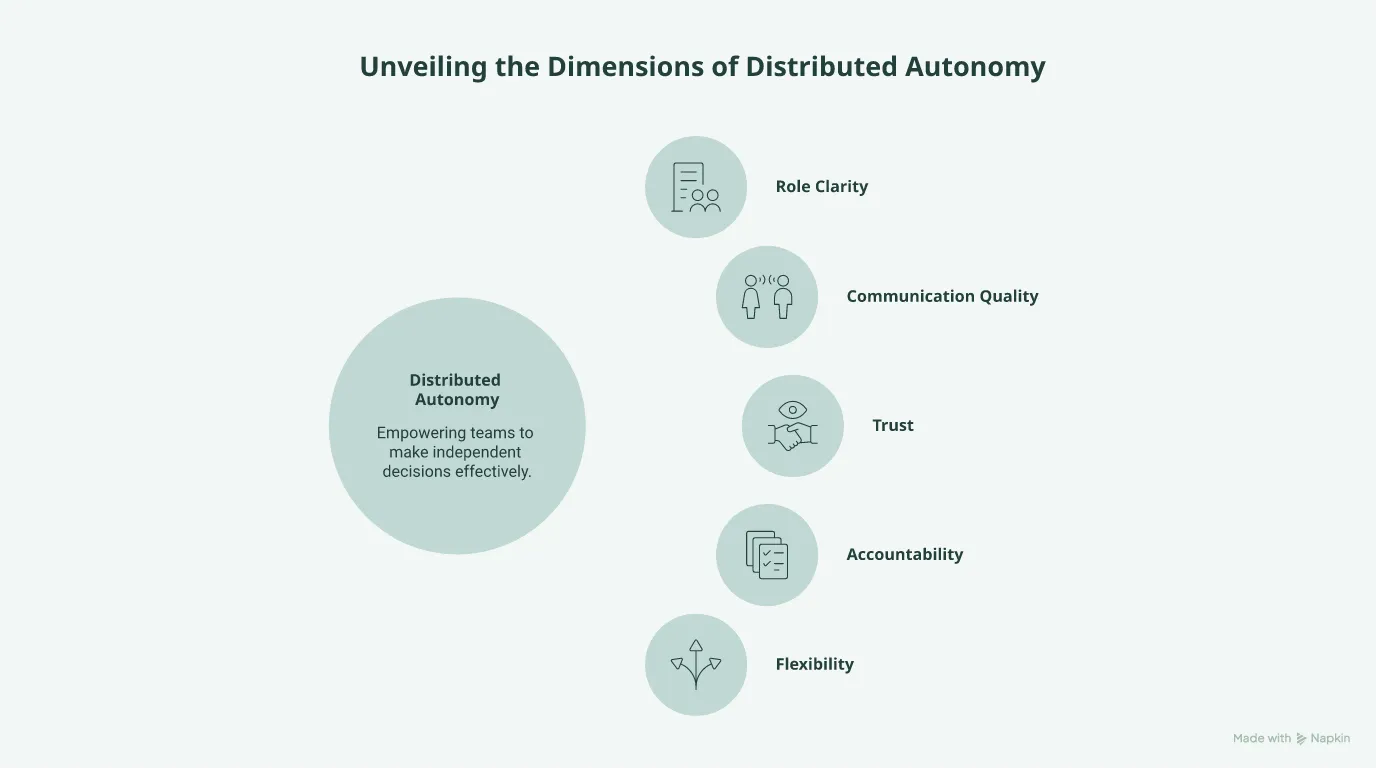
Autonomy in remote teams isn't a linear good. Evidence shows that too little or too much freedom hurts coordination, making managerial role clarity the anchor.
Picture a seasoned product manager who has just transitioned their team to a fully remote operating model. Eager to avoid the trap of micromanagement, they step back completely, telling the team, “You own the outcomes; work however you want.” Weeks later, deadlines are slipping, engineers are duplicating effort, and team members complain in one-on-ones that they feel adrift and unsupported. The manager is paralyzed: stepping in feels like a violation of the autonomy they promised, but staying out is actively harming the team’s ability to coordinate.
This friction point is increasingly common. The shift to distributed work brought an overwhelming consensus: remote teams need autonomy to function. Without the physical office to enforce synchronous work, managers were told to step back, focus on outcomes, and let their teams self-manage. But the reality of distributed work has exposed a flaw in this assumption. Autonomy is not a linear good where more is always better. Instead, its effect on team coordination and manager effectiveness is curvilinear. Too little autonomy results in micromanagement and bottlenecks, but too much autonomy, without the right structural guardrails, creates isolation, fragmented workflows, and a breakdown in team cohesion.
Key takeaways
- Autonomy has diminishing returns: The relationship between autonomy and team coordination is an inverted U-shape; both extremes, micromanagement and laissez-faire leadership, damage effectiveness.
- Role clarity is the structural guardrail: High autonomy only works when the manager has a crystal-clear understanding of their own mandate and communicates those boundaries effectively.
- Daily communication mitigates excessive freedom: Frequent, multimodal electronic communication prevents high autonomy from degrading into isolation and misalignment.
- Communication quality beats frequency: Effective remote communication relies on strategic channel selection and clear expectations rather than simply increasing the volume of messages.
The Curvilinear Reality of Remote Autonomy
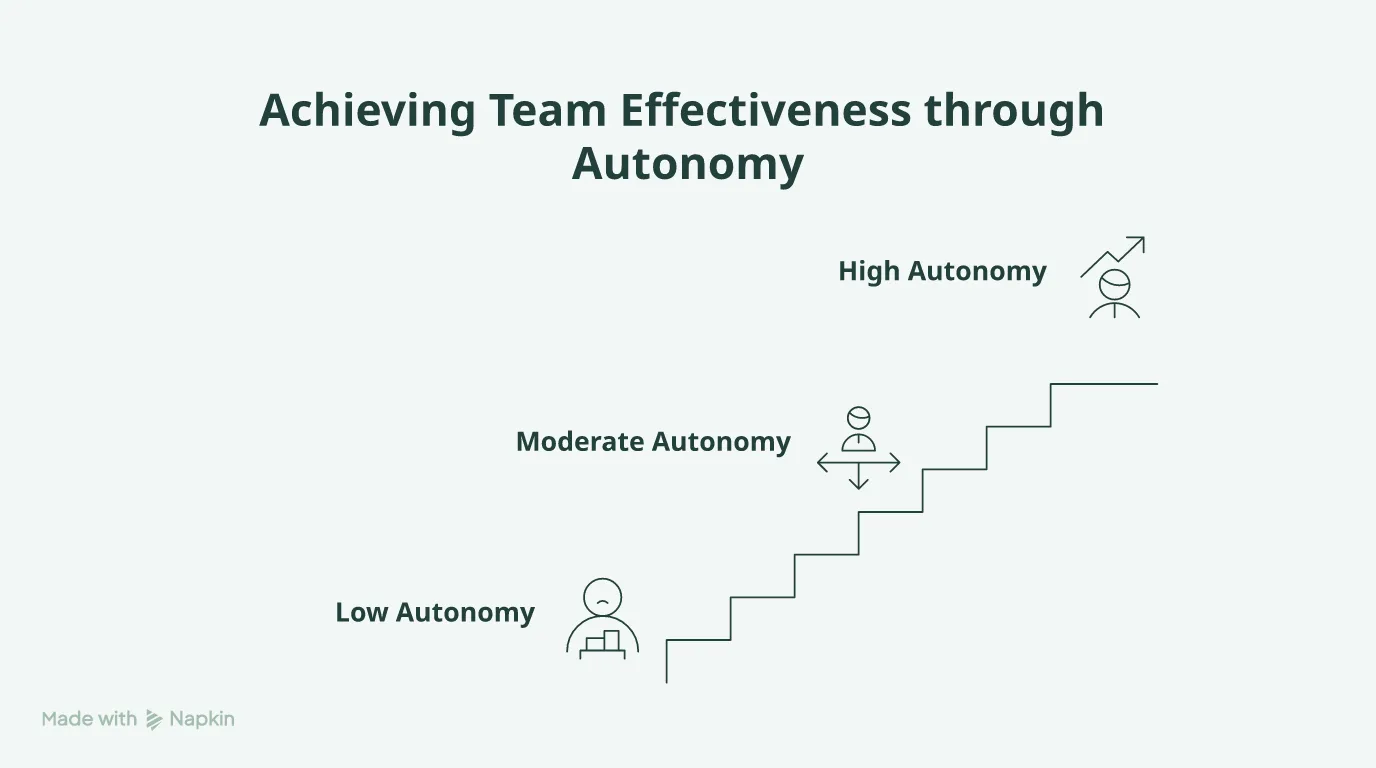
The push for maximum autonomy in remote teams often ignores the psychological and operational need for structure. A 2026 study on distributed teams investigated this dynamic using a two-pronged approach. In their first study, researchers collected time-lagged, multisource field data from 34 managers and 151 of their respective distributed team members. The findings revealed an inverted U-shaped relationship between a manager’s autonomy practices and how effective their team perceives them to be.
When managers provide too little autonomy, they trigger the classic symptoms of micromanagement: team members feel untrusted, and workflows stall as every minor decision requires approval. Employees can feel undermined, leading to lower morale. Conversely, excessive autonomy can be equally destructive. When teams are given complete freedom without a clear framework, the result is often increased uncertainty and an overwhelming sense of responsibility. Team members struggle to align their efforts, leading to fragmented work. In these environments, the manager is often perceived as absent or ineffective because they have failed to provide the necessary support structure for the team to succeed.
This dynamic forces a rethinking of how we approach organizational change, much like unlearning digital transformation, we have to unlearn the idea that remote work simply means “work but without supervision.” A balance is required. There is a “sweet spot” where team members collaborate effectively while maintaining a sense of independence.
Manager Role Clarity as the Anchor
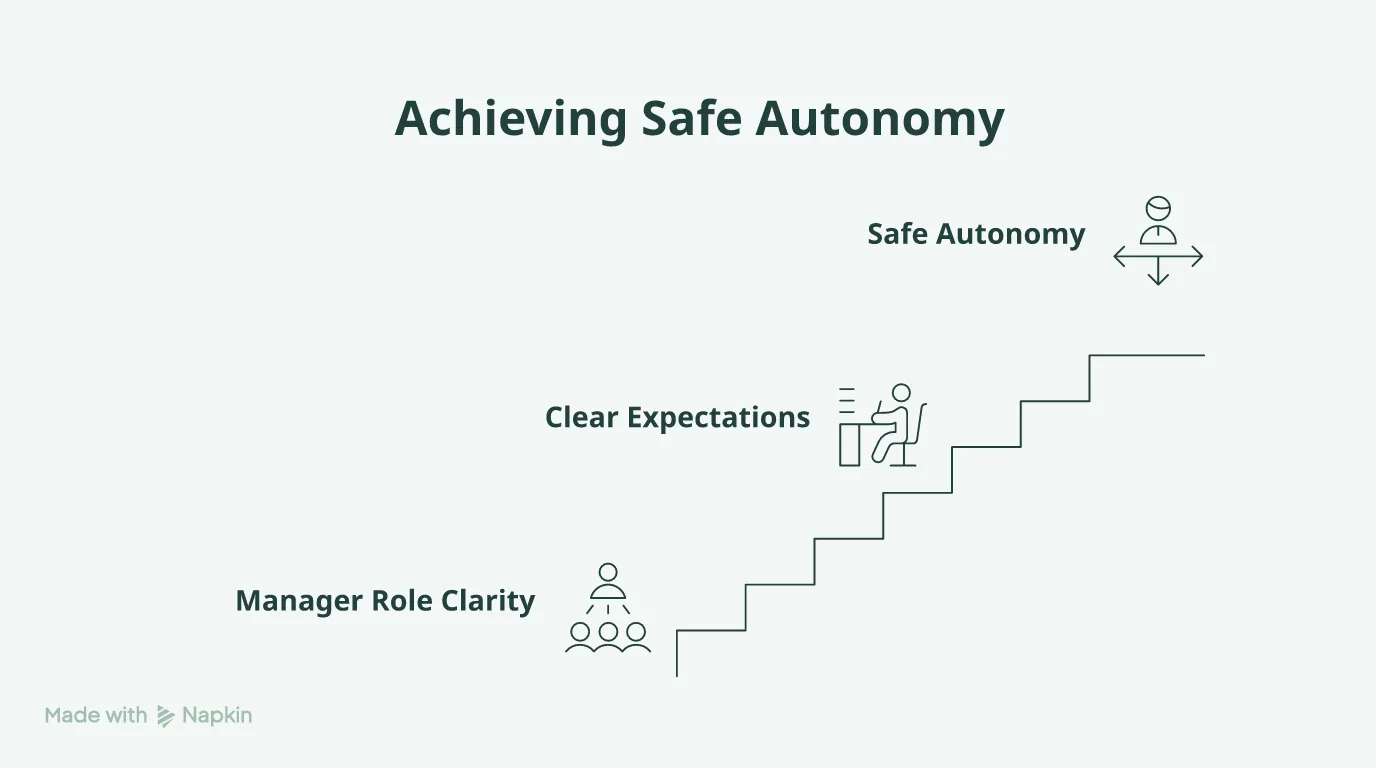
If the sweet spot of autonomy is somewhere in the middle, how do managers find it? The evidence points to manager role clarity as the critical moderating factor. Role clarity is the extent to which a manager understands their own responsibilities and how they fit into the broader organizational structure. In distributed environments, where contextual cues are missing, a manager’s understanding of their own role becomes the foundation for team success.
The 2026 study of 151 team members demonstrated that when a manager has high role clarity, the negative effects of both insufficient and excessive autonomy are flattened (the interaction term between the quadratic term of manager autonomy practice and manager role clarity was significant and positive: 1.23, p < 0.05). A manager who understands their mandate can effectively “filter” organizational goals into specific, actionable responsibilities for their team. They provide the clear expectations and boundaries that allow autonomy to function safely.
Without this clarity, a manager’s attempt to grant autonomy is often perceived as abandonment or laissez-faire leadership. The ambiguity regarding their own responsibilities diminishes their ability to provide the “structural guardrails” necessary to support team independence. Consequently, any deviation from an optimal level of autonomy is likely to be perceived more critically by the team. Leader role clarity provides the necessary framework for autonomy to be effective, empowering teams with the right amount of freedom while ensuring everyone remains aligned.
Communication Quality and the Right to Disconnect
Finding the autonomy sweet spot also requires a deliberate approach to communication. A second study within the same 2026 research utilized a diary methodology, tracking 150 distributed team workers over a two-week period, gathering 716 observations. The results showed that daily communication patterns within the team moderated the impact of autonomy on team coordination (interaction effect of 0.44, p < 0.08). Frequent communication helps team members develop a shared understanding of goals and priorities, reducing the uncertainty that comes with high autonomy. It provides managers with visibility into progress without requiring constant, direct oversight.
However, a complementary 2026 study on workplace communication in remote teams using Media Richness Theory, surveying a targeted sample of remote workers, highlighted that it is the quality of this communication that dictates whether a team feels connected. Remote workers rely on a combination of traditional media, messaging applications like Slack and Teams, and video conferencing like Zoom. Participants expressed that feelings of disconnection stemmed from delayed responses, missed messages, unclear expectations, and difficulties interpreting tone in text-based communication, rather than just a low volume of messages.
This does not mean teams should be overwhelmed with continuous syncs. The research underscores the importance of communication autonomy, the ability of employees to manage the timing and sequencing of their communication. When organizations emphasize strategic channel use (e.g., video for complex or relational issues, messaging apps for routine coordination) and establish clear organizational norms around response times, they empower teams to coordinate effectively. By maintaining open channels without violating the right to disconnect, managers can ensure that their team members have the support and guidance they need to work effectively, whether they have a lot of autonomy or just a little.
References
- Wong, S. I., van Gils, S., Lei, W. S. (C.), & Černe, M. (2026). Daily team communication, manager role clarity and experienced autonomy in distributed teams. Personnel Review, 55(5), 1237-1258. https://doi.org/10.1108/PR-02-2025-0130
- Longo, S. A. (2026). Workplace communication in remote-based teams: a media richness approach. Corporate Communications: An International Journal. https://doi.org/10.1108/CCIJ-09-2025-0267
Frequently asked questions
Why doesn't maximum autonomy work for remote teams?
Maximum autonomy often leads to isolation and fragmented workflows. Without clear structural guardrails and guidance, team members can experience increased uncertainty and struggle to align their efforts with the broader team goals.
How does a manager's role clarity affect team autonomy?
A manager's clear understanding of their own responsibilities acts as a necessary anchor. When managers have high role clarity, they can set clear boundaries and expectations, which prevents high autonomy from feeling like abandonment or laissez-faire leadership.
Does better remote team communication just mean more messages?
No, communication quality is far more important than frequency. Effective communication relies on strategic channel selection based on the complexity of the task, clear expectations regarding response times, and respecting employees' communication autonomy.