The Wallet PM's Real Constraint in a Dual-Regulator, Fraud-Heavy Reality
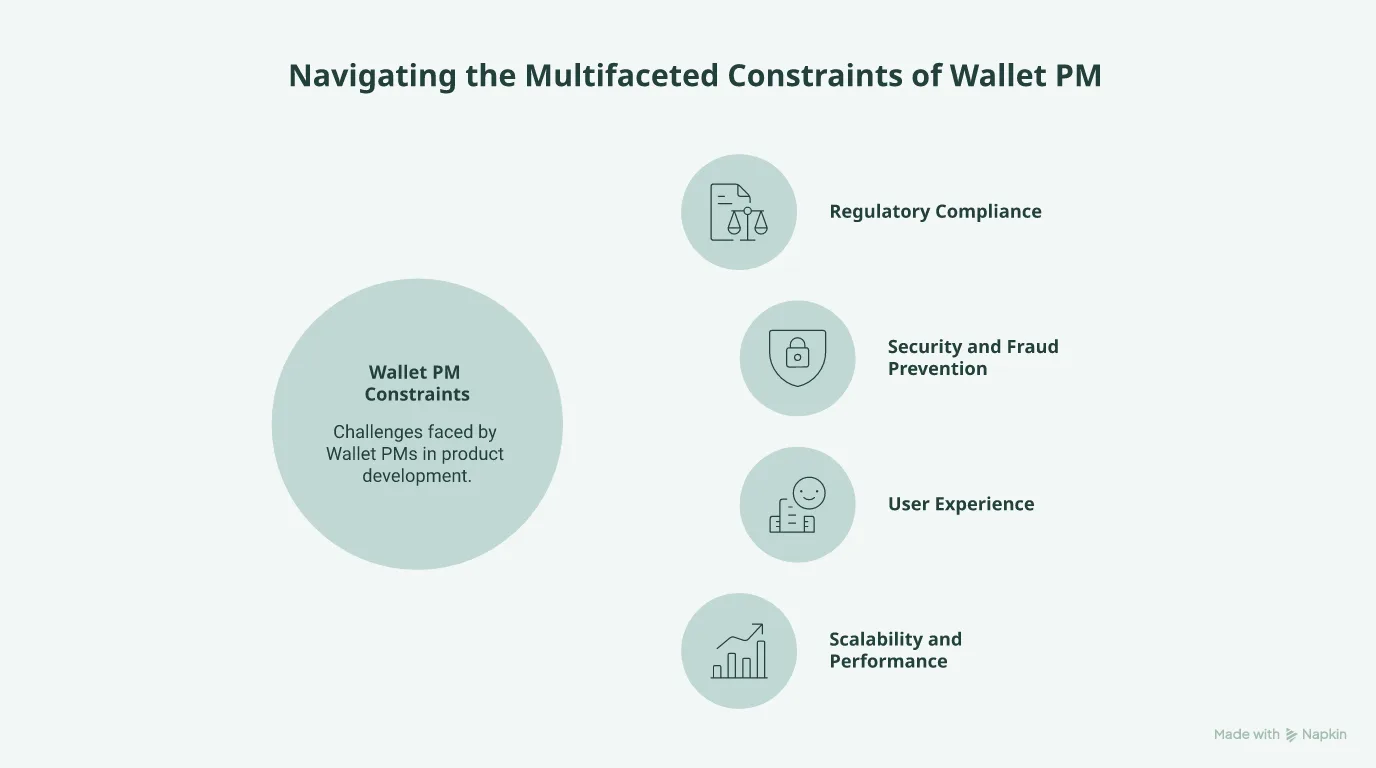
At scale, a wallet roadmap is shaped by regulation and risk before features: the BI/OJK split, risk-based licensing, and an asymmetric fraud surface.
The modern fintech narrative loves a frictionless user experience. We talk about single-tap checkouts, instant onboarding, and ecosystem flywheels. But when you are building a digital wallet that processes millions of transactions a day, the reality of product management is profoundly different.
At scale, the roadmap is not dictated by what features the user wants next. It is shaped entirely by the shifting tectonic plates of macroprudential regulation, microprudential compliance, and the relentless, industrialized evolution of financial fraud. Navigating this environment requires treating compliance not as a localized legal function, but as the foundational constraint of system architecture.
Key takeaways
- Architect for the regulatory divide: The formal split between Bank Indonesia (BI) and the Financial Services Authority (OJK) mandates a strict decoupling in product architecture between stored value and credit ledgers.
- Compliance dictates product velocity: The TIKMI assessment framework requires maintaining a 10% capital adequacy ratio and restricts product launches that are not pre-approved in triennial business plans.
- Standardization removes backend flexibility: Mandates like the SNAP API protocol force engineering teams to adopt brittle, zero-variance cryptographic implementations where a single misplaced whitespace causes authorization failures.
- Fraud defense must move to the client: With a 1,550% surge in deepfake attacks and sophisticated on-device fraud, traditional backend risk rules are obsolete. The defense relies on passive behavioral biometrics and client-side smart friction.
The Jurisdictional Split: BI vs. OJK
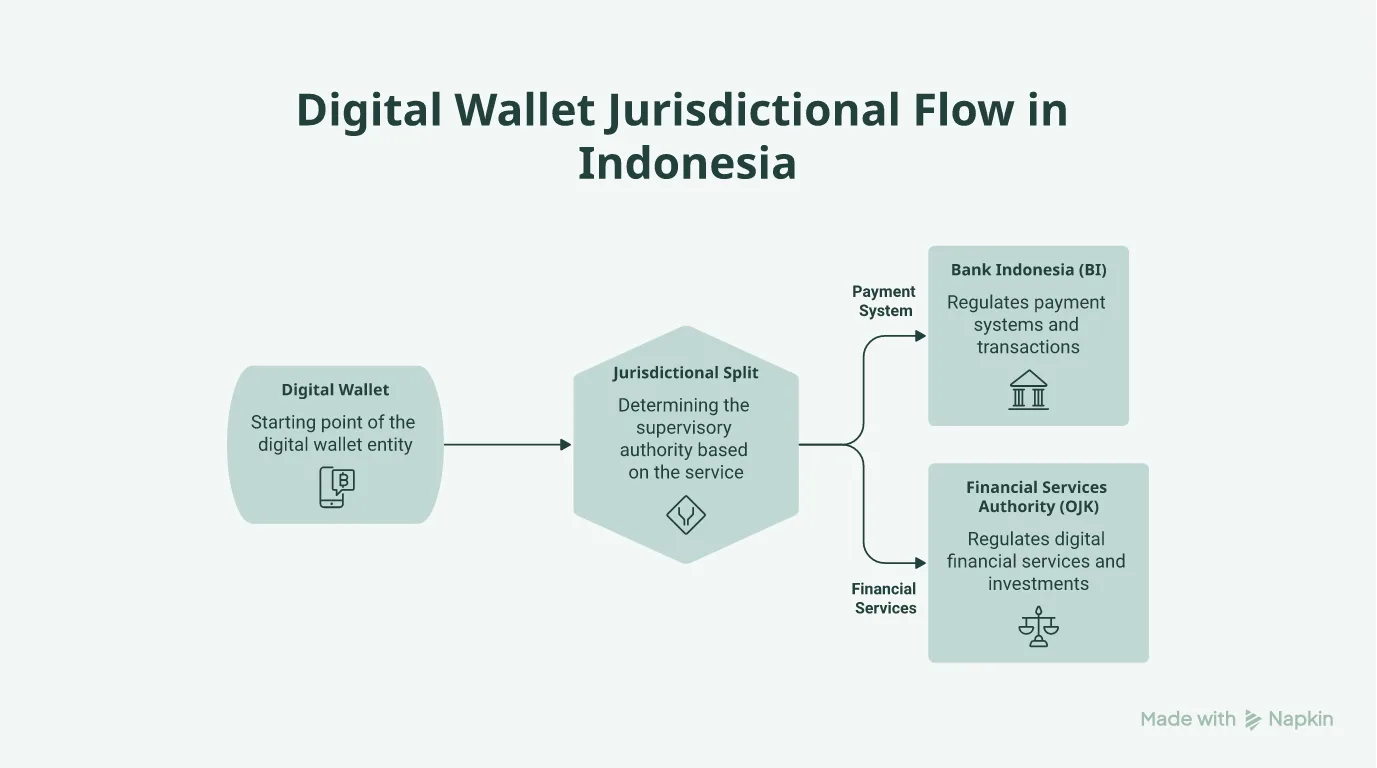
The most defining constraint for an Indonesian digital wallet is the definitive demarcation of regulatory authority. The enactment of Law No. 4 of 2023 (UU P2SK) formally bifurcated the ecosystem: Bank Indonesia (BI) governs macroprudential stability and the payment system infrastructure, while the Financial Services Authority (OJK) exercises microprudential supervision over consumer lending, embedded finance, and digital banking.
For a senior product manager, this split demands a “Chinese Wall” in system design. Prior to this legislation, wallets often operated in a gray area where stored value and credit lines were blended into single user interfaces. Today, the stored value (e-money) ledger, transaction routing, and fund transfers fall exclusively under BI’s purview, while any credit ledger or installment facility, such as Buy Now Pay Later (BNPL) under POJK 32/2025, is governed entirely by the OJK. E-money balances cannot be automatically swept to repay BNPL arrears without an explicit, distinct, and auditable user authorization layer. This fundamentally alters the user checkout flow, requiring unambiguous disclosure of the underlying lender at the point of transaction to satisfy transparency mandates.
The TIKMI Framework and Activity Bundling
Under Bank Indonesia’s PBI 10/2025, legacy licensing is replaced by a dynamic, risk-based “Activity Bundling” framework. At the core of this regulation is the TIKMI assessment, evaluating Transactions, Interconnection, Competence, Risk Management, and Information Technology Infrastructure. For primary payment service providers, this means maintaining a minimum ongoing capital ratio of 10% of risk-weighted transactions, augmented by a systemic capital surcharge of 1.5% to 2.5%.
This is not a static audit. It is a gateway that controls a platform’s product velocity. If a fintech fails to meet the TIKMI threshold for its respective bundle, BI holds the explicit authority to suspend the provider’s ability to launch new products, expand business activities, or integrate with new third-party partners. Product managers must align their roadmaps with the regulatory submission cycle, integrating triennial Strategic Business Plans and annual Payment System Business Plans. Any product launches not forecasted and approved within these plans face significant regulatory friction.
The Economics of E-Money Limits and e-KYC
To mitigate money laundering while encouraging inclusion, BI enforces a strictly bifurcated capability matrix for e-money accounts based on Customer Due Diligence (CDD). Unverified accounts are capped at an IDR 2,000,000 holding balance and an IDR 20,000,000 monthly cumulative incoming limit. Upgrading to a verified tier unlocks higher capabilities, like a IDR 40,000,000 monthly incoming limit and access to the IDR 10,000,000 per-transaction QRIS cap.
However, upgrading a user requires executing an e-KYC process. In Indonesia, validating biometric data against the civil registry (Dukcapil) incurs direct transactional costs averaging between $0.15 and $0.33 USD per successful hit. For a wallet operating on razor-thin margins or offering zero-fee transfers, uncontrolled e-KYC costs can devastate Customer Acquisition Cost (CAC) metrics. Product strategy must treat the e-KYC gateway as a high-friction, high-cost funnel. Teams deploy progressive profiling, delaying the KYC prompt until high intent is demonstrated, and run cheap regex and OCR confidence scoring before firing the expensive API endpoint. They also layer alternative data, like verifying names against telco billing records via an idn_phone endpoint for just $0.16 per check, to supplement risk scoring.
SNAP Compliance: The Cryptographic Handshake
To enforce interoperability and prevent dominant platforms from establishing closed-loop monopolies, Bank Indonesia mandates the Standar Nasional Open API Pembayaran (SNAP). For a payment gateway or e-money issuer, SNAP compliance is a strict prerequisite for passing the IT infrastructure pillars of the TIKMI assessment.
SNAP enforces a unified linguistic, architectural, and cryptographic standard for payment integration. The cryptographic layer relies on a dual-signature architecture: Asymmetric Signatures (SHA256withRSA) for Access Token Generation, and Symmetric Signatures (HMAC-SHA512) for Transaction Payload Authorization. This requires the strict concatenation of specific header elements with a hashed representation of the request body. The JSON minification step is notoriously brittle. If a backend utilizes a JSON serializer in Golang or Node.js that handles whitespace or key ordering differently than the receiving bank’s parser, the resulting SHA-256 hash diverges, causing an immediate 401 Unauthorized signature validation failure. Engineering teams must implement deterministic JSON serialization protocols that strictly strip all non-structural whitespace prior to hashing. Furthermore, B2B access tokens are deliberately short-lived, with expirations standardized at exactly 15 minutes, forcing the architecture to rely on asynchronous background daemons that preemptively rotate credentials.
The On-Device Fraud (ODF) Epidemic
While regulatory compliance dictates system architecture, fraud mitigation dictates the user experience. The ecosystem is facing a polycrisis of threats. Industry data reports a 1,550% surge in AI-driven deepfake fraud within the fintech sector, and a socio-economic epidemic of online gambling (judol) estimated to generate a turnover of IDR 1,200 trillion by the end of 2025. Traditional Account Takeover techniques have been largely neutralized by multi-factor authentication and device binding. In response, organized threat actors have shifted toward highly evasive mobile malware capable of executing On-Device Fraud (ODF).
In an ODF scenario, a fraudulent transaction originates from the legitimate user’s physical, authenticated device. Android banking trojans abuse the Accessibility Service to monitor the screen in real-time, capturing login credentials and intercepting SMS-based OTPs. They project a “black screen” overlay to obscure the display, autonomously navigating the legitimate wallet application to initiate high-value transfers without the user’s knowledge. Because the transaction occurs on the authorized hardware, it perfectly matches the established, legitimate user profile, the device ID, IP address, and geolocation all align, entirely bypassing traditional backend device fingerprinting checks.
Smart Friction as a Product Feature
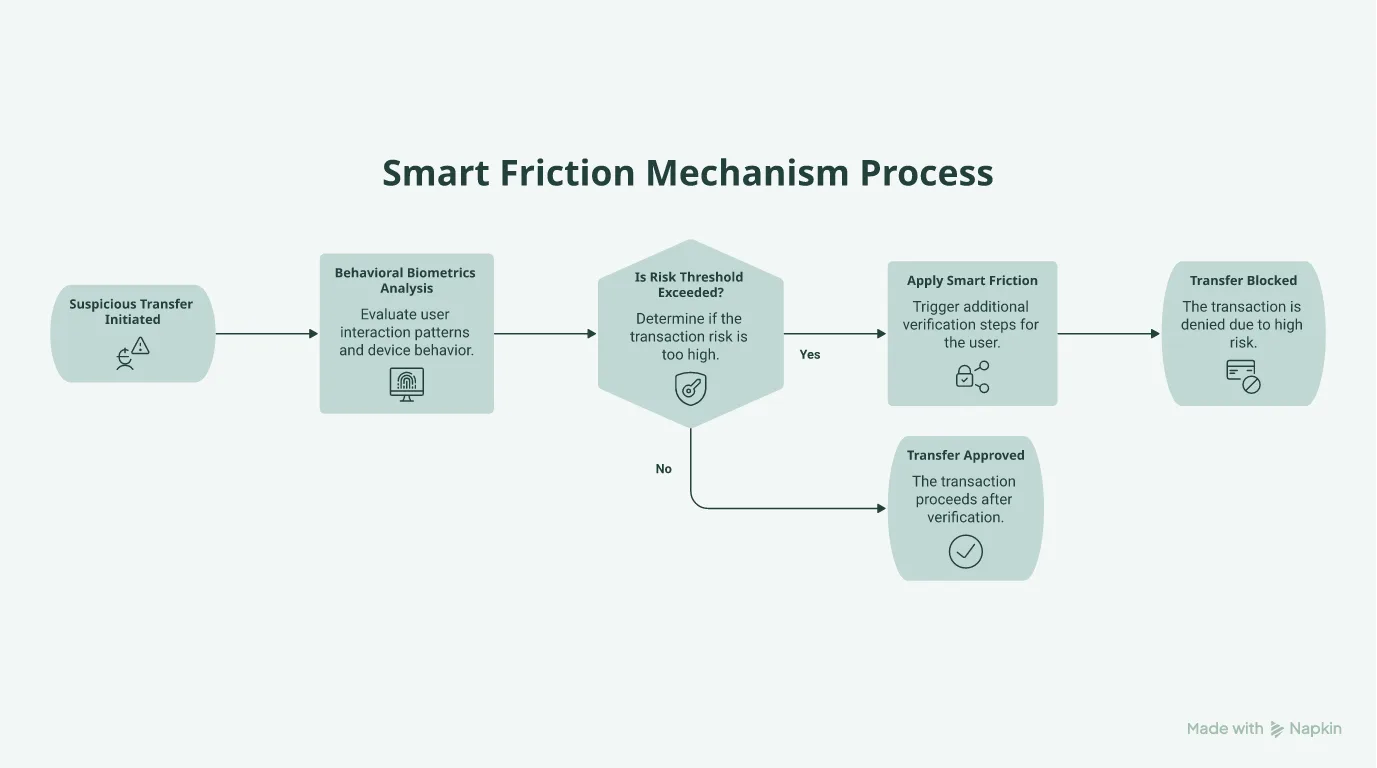
To combat ODF and social engineering campaigns, leading platforms have evolved past binary blocking by translating complex risk policy directly into dynamic, user-facing product features, a mechanism known as “Smart Friction.” Digital wallet provider DANA famously utilized this targeted friction technology to reduce online gambling-related transactions on its platform by an impressive 80%.
Rather than immediately declining a transaction, the platform intentionally introduces targeted friction. If the central risk engine detects concurrent behavioral biometric anomalies, such as perfectly linear screen swipes and uniform typing speeds with zero millisecond variance, indicative of malware automation, the transaction is suspended. The wallet demands an immediate biometric re-verification, forcing the user to execute a passive liveness facial scan. This directly neutralizes ODF: a remote attacker operating via an Automated Transfer System cannot physically satisfy a live facial biometric challenge, instantly terminating the fraudulent transfer.
In this hyper-connected, high-velocity environment, product leaders must view their risk architecture not merely as a regulatory tax, but as a core competitive differentiator that guarantees consumer safety. Designing trust into the transaction requires an engineering philosophy that treats fraud deterrence as a structural pillar of the product, on par with transaction latency and availability, which is ultimately required to build the foundation of why the wallet is the wedge for a broader financial ecosystem.
References
- Bank Indonesia. (2025). Peraturan Bank Indonesia Nomor 10 Tahun 2025 tentang Pengaturan Industri Sistem Pembayaran (PBI PISP). https://www.bi.go.id/id/publikasi/peraturan/Pages/PBI-10-2025.aspx
- Otoritas Jasa Keuangan. (2025). POJK Nomor 32 Tahun 2025 tentang Praktik Buy Now Pay Later (BNPL). https://www.ojk.go.id/id/regulasi/Pages/POJK-Nomor-32-Tahun-2025.aspx
- Mordor Intelligence. (2025). Indonesia Financial Technology Services Market Forecasts to 2031. https://www.mordorintelligence.com/industry-reports/indonesia-financial-technology-services-market
Frequently asked questions
What is the BI and OJK jurisdictional split?
Bank Indonesia (BI) governs macroprudential stability and payment system infrastructure, while the Financial Services Authority (OJK) oversees microprudential supervision over consumer lending and digital banking. This mandates strict separation between stored value (e-money) and credit (BNPL) architectures within digital wallets.
What is the TIKMI assessment in Indonesia?
TIKMI is a consolidated risk-based assessment framework by Bank Indonesia evaluating Transactions, Interconnection, Competence, Risk Management, and Information Technology Infrastructure. It controls a platform's regulatory licensing and product launch velocity.
How do digital wallets combat On-Device Fraud (ODF)?
Platforms combat ODF by utilizing behavioral biometrics to detect non-human interaction patterns, such as uniform typing speeds. When detected, they trigger 'Smart Friction' mechanisms like demanding a live biometric facial scan that malware cannot physically satisfy.